Ask a patrol officer what they think of a new community feedback program, and brace for the honest answer. Most have watched a decade of technology arrive wearing the word "accountability," and nearly every one of those systems recorded the same thing: what went wrong. So when leadership asks officers to personally hand people a way to rate them, the mental math is fast and grim. More channels, more complaints.
That is exactly where officers at the Warrenton Police Department, a municipal agency in Virginia, started. This is the story of what happened when they ran that math and then watched reality come back with a different answer. If your patrol division is where good ideas go to die, this one is worth reading, and worth handing to them.
The fear is rational
Take the skepticism seriously, because it is earned. An officer's experience of feedback is lopsided. The person who felt wronged has a complaint form, a phone line, and a supervisor's email. The two hundred people that same officer helped last month have nothing. It is reasonable to assume any new channel carries the same one-way traffic, just faster.
There is a quieter worry underneath it: that the ratings would be unverified noise. Comment boxes and review sites can be filled by anyone, about anything, fairly or not. No officer wants a performance record shaped by people they never actually met. Officer Molly Kimball of Warrenton remembers where her team started.
At first we were skeptical. We thought it might bring more negative feedback.
Officer Molly Kimball, Warrenton Police Department
That sentence could have been spoken in any roll-call room in America.
The design answers the fear
What Warrenton's officers ran into, almost point for point, was a system built against those specific worries.
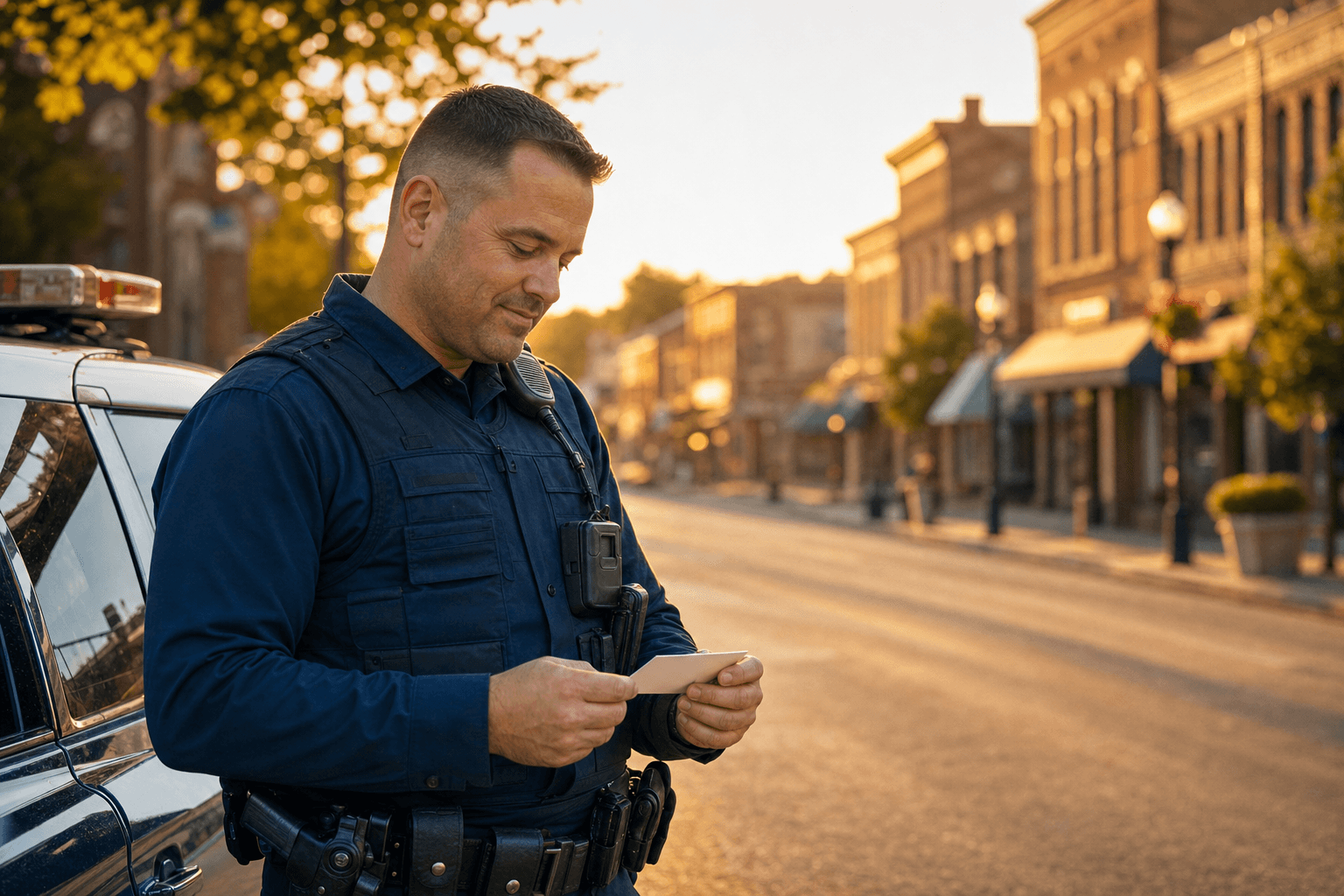
Feedback is verified, not open. Officers hand out single-use QR interaction cards at the end of routine encounters. Each card works once, so every response ties to a real interaction with a real community member. Nobody who was not there can rate anyone. That single choice, covered in depth in our piece on how verified, anonymous feedback works, removes the comment-section scenario entirely.
The survey measures behavior, not outcome. The anonymous survey takes about sixty seconds and asks about five procedural justice behaviors: did the officer explain why, listen, act fairly, stay professional, and explain next steps. An officer who writes a ticket can still score perfectly, because the questions are about how the stop was conducted.
Nothing is added to the workload. The cards are designed, printed, and delivered by Guardian Score, with no IT integration to wrestle. Handing one over turns out to be a natural closing gesture: here is why I stopped you, here is what happens next, here is a way to tell us how I did.

The reality: mostly positive, genuinely useful
Then the responses started coming in. Across agencies using Guardian Score, the average rating is 4.7 out of 5, and roughly two-thirds of surveys include written comments. Officers were not just seeing high marks. They were reading, in the community's own words, descriptions of encounters they remembered. The kindness extended at 2 a.m. on a Tuesday, witnessed by no one, was suddenly on the record.
After using it, a lot of us really like it. It's been a positive experience for me and my colleagues.
Officer Molly Kimball, Warrenton Police Department
The distance between "we thought it might bring more negative feedback" and "a lot of us really like it" is the entire adoption story, told by an officer. Chiefs champion programs. Officers vouch for them, and that carries further.
Why converting the skeptics matters most
A program officers merely tolerate produces cards left in glove boxes. A program officers actually like produces data, and something more valuable than data. When officers feel the community's gratitude directly, the guardian mindset stops being a training slide and becomes a felt reality: most of the public is rooting for you, and now there is a channel that says so. That steady recognition is also one of the most practical morale and retention tools an agency can deploy, because it costs nothing and arrives continuously.
None of this means every rating glows. It means the feedback is constructive and proportionate, closer to the truth of an officer's month than a complaint log has ever been. And that is the metric that unlocks everything else. Coaching, recognition, and trust measurement all depend on one thing: officers willingly handing out the card. Win the patrol division, and the program wins.
Frequently asked questions
Were Warrenton officers resistant to Guardian Score at first?
Yes. Officer Molly Kimball says officers were skeptical and assumed the system would bring more negative feedback, a fear common in patrol divisions asked to hand community members a way to rate them.
What changed the officers' minds about community feedback?
The responses themselves. Across agencies using Guardian Score, the average rating is 4.7 out of 5 and roughly two-thirds of surveys include written comments, so officers saw mostly positive, constructive feedback about real encounters. Kimball says that after using it, a lot of officers really like it.
Can community members leave unfair ratings about officers they never met?
No. Feedback comes only through single-use QR interaction cards handed over at the scene, so each anonymous survey is tied to a real interaction. The sixty-second survey rates five procedural justice behaviors, meaning how the encounter was conducted rather than whether the person liked the outcome.