
Every chief eventually stands in front of a town council, a community meeting, or a skeptical reporter and hears some version of the same question: how do we know your officers are doing a good job? For most of the history of American policing, the honest answer has been some mix of anecdotes, complaint counts, and "trust me."
Chief Kahle Magalis of the Front Royal Police Department, a municipal agency in Virginia, wanted a better answer. Not a better speech. Actual evidence.
Legitimacy you can claim but not show
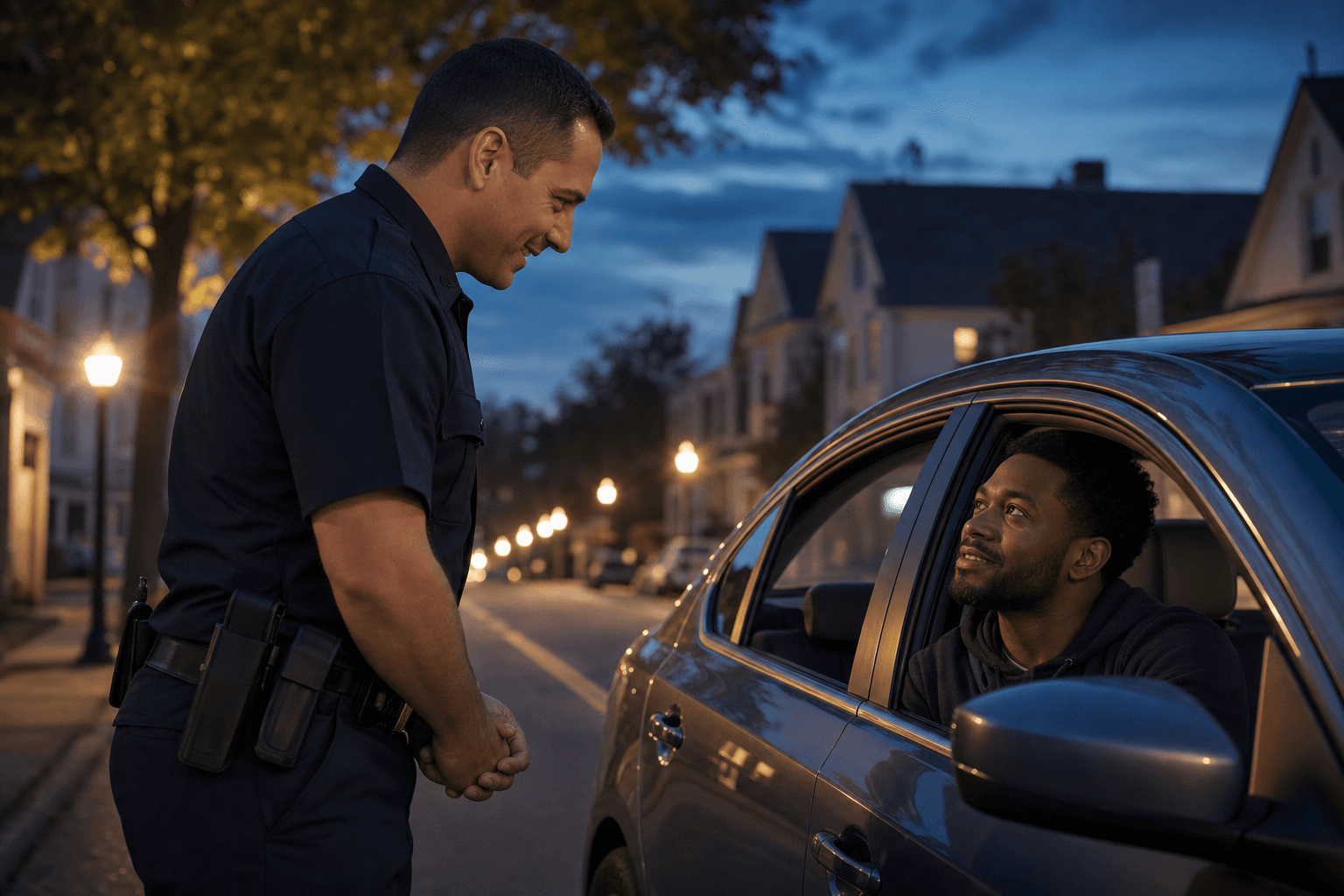
Here is the strange asymmetry at the heart of police accountability. When something goes wrong, the documentation is exhaustive: reports, review boards, body-camera timestamps, sometimes headlines. When something goes right, which is the overwhelming majority of the time, there is usually no record at all. The patient explanation to a frightened driver, the professionalism under provocation, the extra ten minutes spent listening. All of it evaporates the moment the encounter ends.
That leaves chiefs in an impossible spot. They know their officers do good work. They see it. But knowing is not proving, and in an era when every agency is asked to demonstrate transparency, an unprovable claim reads as no claim at all. As we explore in officer recognition and retention, most officer excellence stays invisible until someone measures it.
Turning everyday encounters into standing evidence
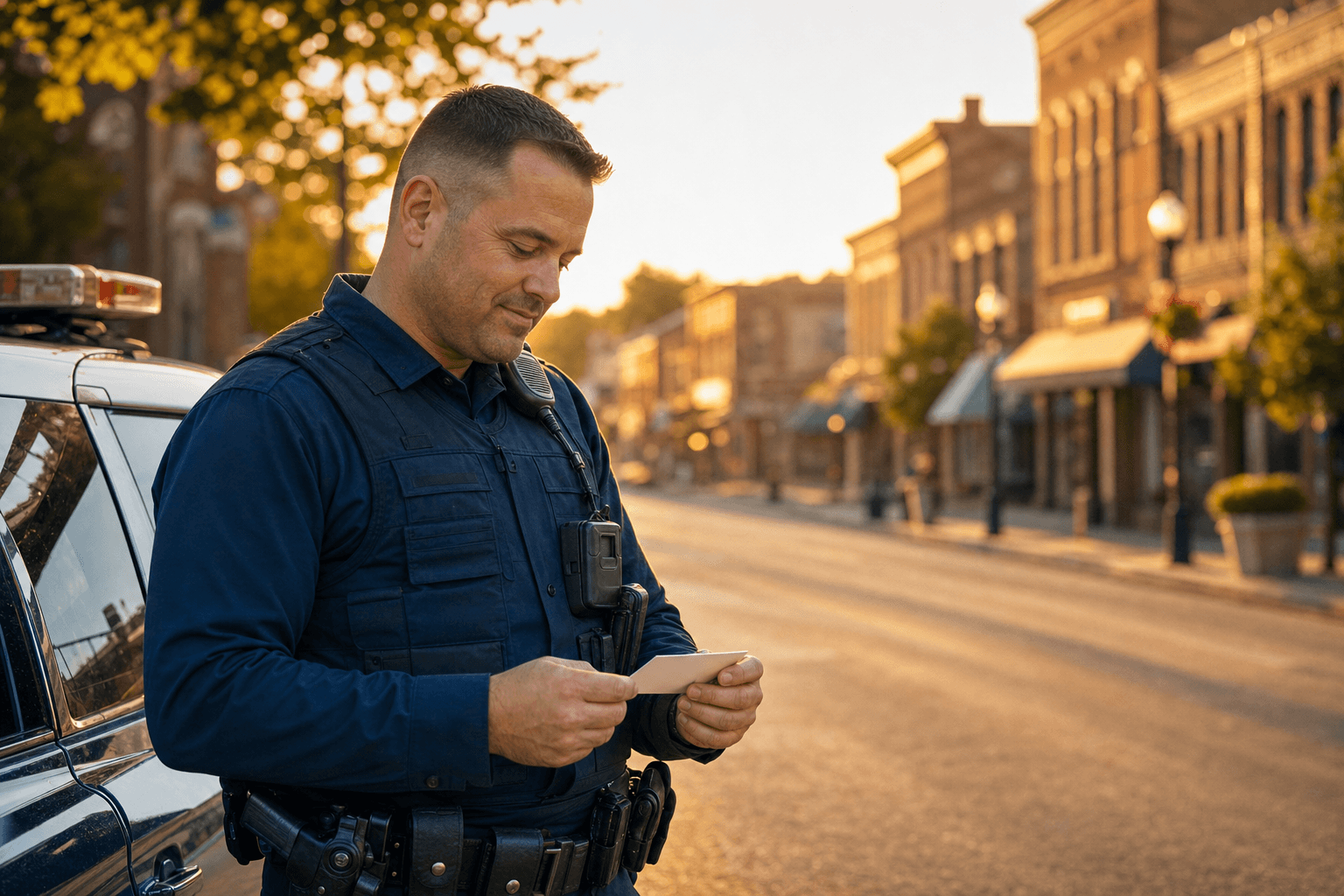
Front Royal adopted Guardian Score's verified feedback system. Officers hand out single-use QR interaction cards during routine encounters, and community members complete an anonymous survey that takes about sixty seconds, rating five procedural justice behaviors: explaining why, listening, fairness, professionalism, and explaining next steps. Because each card is handed over in person and works exactly once, every response is tied to a real interaction rather than an open web form. There is no IT project involved. The cards are designed, printed, and delivered by Guardian Score, and results appear on dashboards at the officer, squad, and department level.
For a chief, the shift is subtle but complete. The question "how do we know?" now has an artifact for an answer.
It's designed as a tool we utilize to promote the fact that we're a legitimate, transparent agency. This gives me a way to prove our officers do a good job.
Chief Kahle Magalis, Front Royal Police Department
Two words in that quote matter. The first is prove. Not assert, not believe. Prove, with verified feedback from the people his officers stopped, helped, and served. The second is designed. He chose an instrument built for transparency and aimed it at the question his agency is asked most.
Proof travels in three directions
What makes standing evidence so valuable is that the same dataset answers different audiences at once.
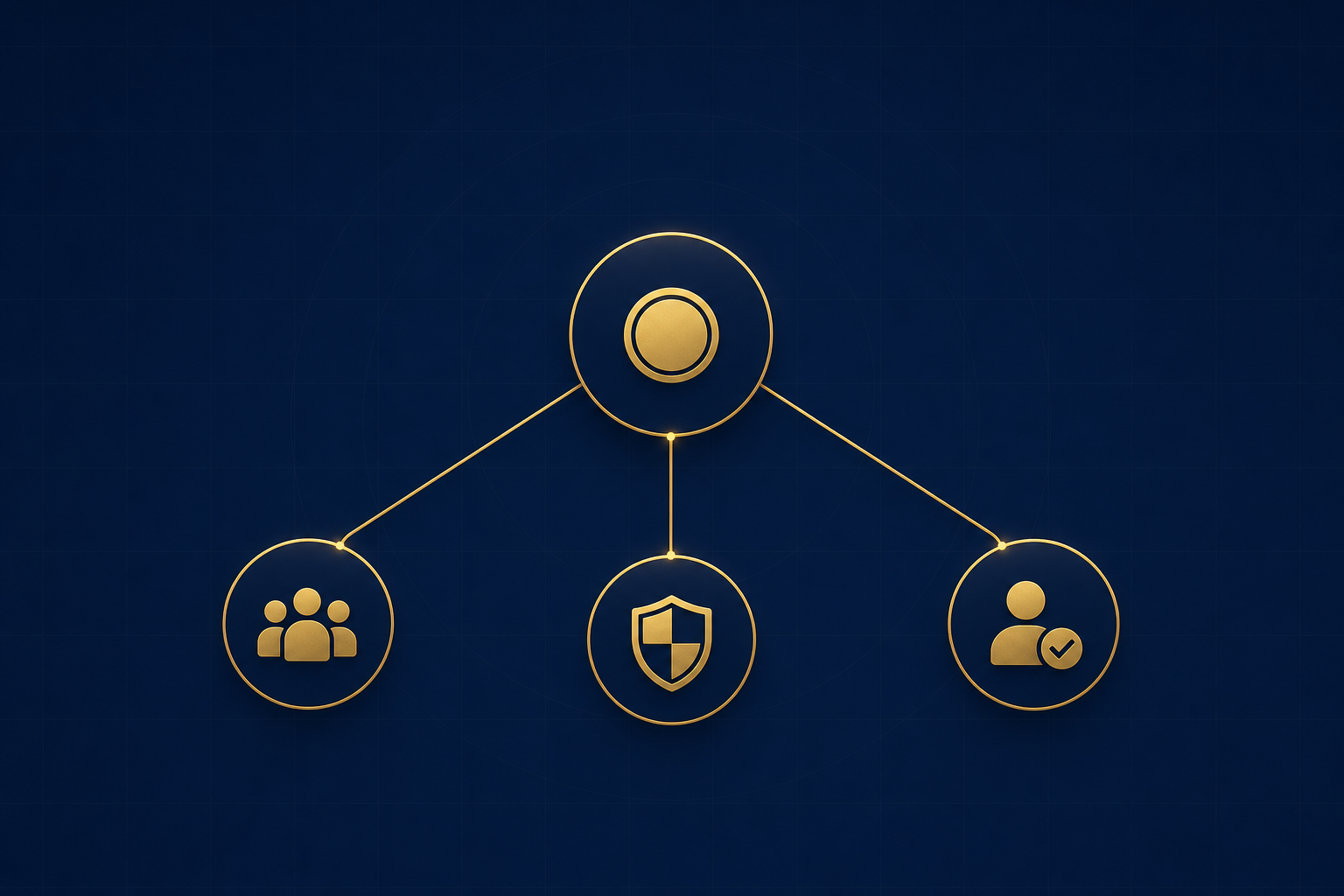
To the council and the community, it is a transparency instrument. When an agency invites anonymous, verified feedback on every routine encounter and shares what comes back, it stops asking to be trusted and starts showing why it should be. Across agencies using Guardian Score, the average rating is 4.7 out of 5, and roughly two-thirds of surveys include written comments, which means the proof arrives in the community's own words, not just numbers. That is the kind of documented feedback mechanism that also maps cleanly onto accreditation expectations around community input.
To his own officers, it is recognition with receipts. Officers are used to systems that only record their worst moments. A feedback stream that captures the ordinary excellence of ordinary shifts tells them, week after week, that the good work counts now. That message, your community sees you and so does your chief, is one of the most underrated retention tools in policing, and the foundation of programs like Guardian Moments that turn standout interactions into recognition.
To the chief himself, it is an early-warning and confirmation system in one. The same five-behavior framework that documents excellence will also surface drift, giving supervisors a chance to coach small concerns before they become large ones. Proof of good work and early sight of problems are not two systems. They are one honest dataset read carefully.
Legitimacy as a daily practice
There is a deeper idea under the Front Royal story. Legitimacy is not a reputation an agency has. It is a verdict the community renders, one encounter at a time. A department that measures those encounters is asking for that verdict continuously, which is itself an act of confidence. Magalis's insight was that believing your officers do good work is not enough. You have to build the mechanism that proves it, and then use it openly, the way other Virginia agencies like Charlottesville have on their highest-volume encounters.
The practical takeaways for any chief are short. Stop defending good policing with anecdotes, because stories run out the moment a bad news cycle arrives. Frame the system as promotion of your legitimacy, not surveillance of your officers. Let the proof serve your people first, not just the council chamber. And start before you are asked, because evidence gathered in calm weather is what carries an agency through a storm.
Frequently asked questions
Why did Front Royal Police adopt Guardian Score?
Chief Kahle Magalis says the system is designed as a tool the agency utilizes to promote the fact that it is a legitimate, transparent agency, and that it gives him a way to prove his officers do a good job.
How does verified feedback prove officers are doing a good job?
Officers hand out single-use QR interaction cards during routine encounters, so every anonymous survey response is tied to a real interaction rather than an open web form. Across agencies using Guardian Score, the average rating is 4.7 out of 5, and roughly two-thirds of surveys include written comments in the community's own words.
Does implementing community feedback require an IT project?
No. Guardian Score requires no IT integration. The interaction cards are designed, printed, and delivered by Guardian Score, and results appear on dashboards at the officer, squad, and department level.