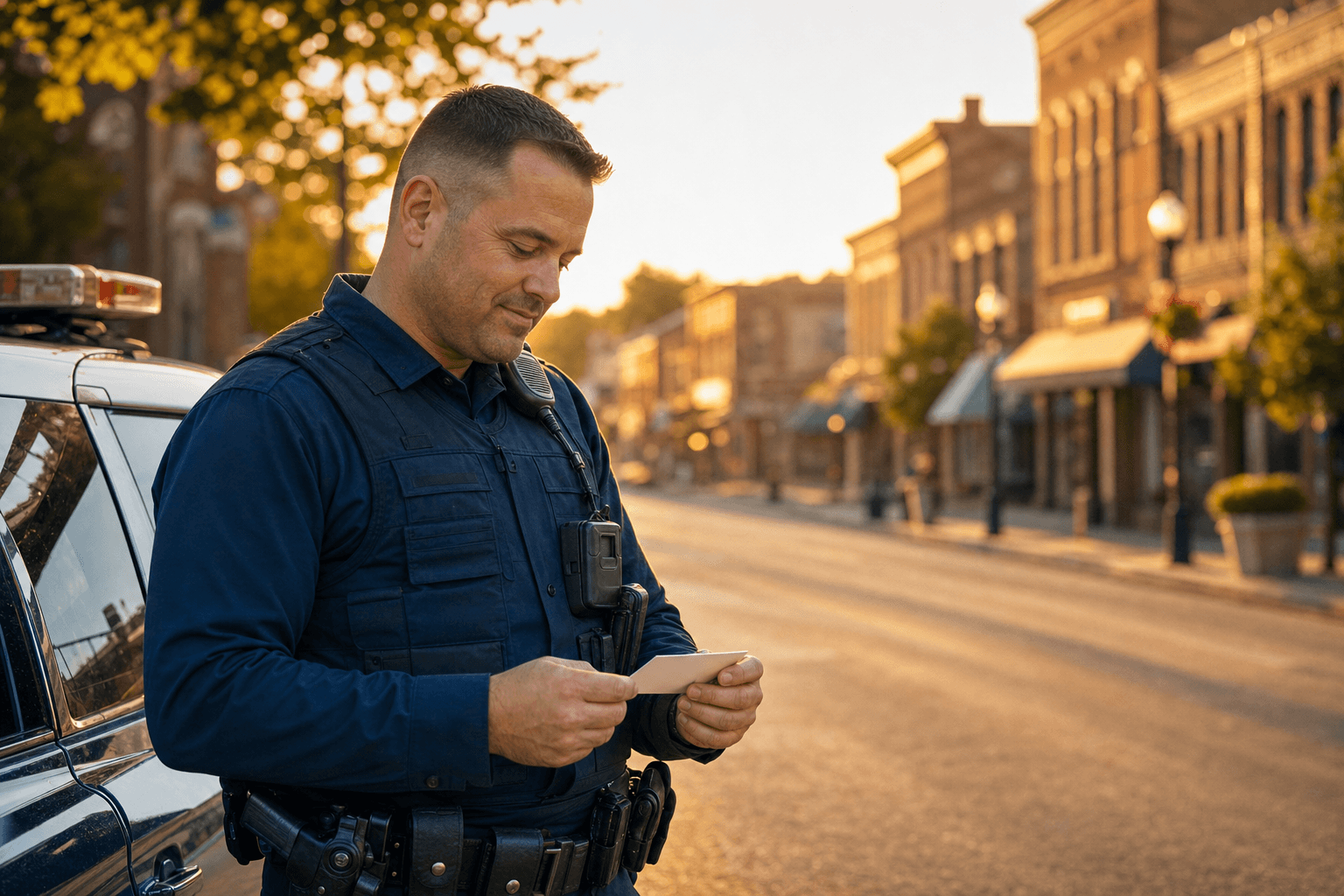
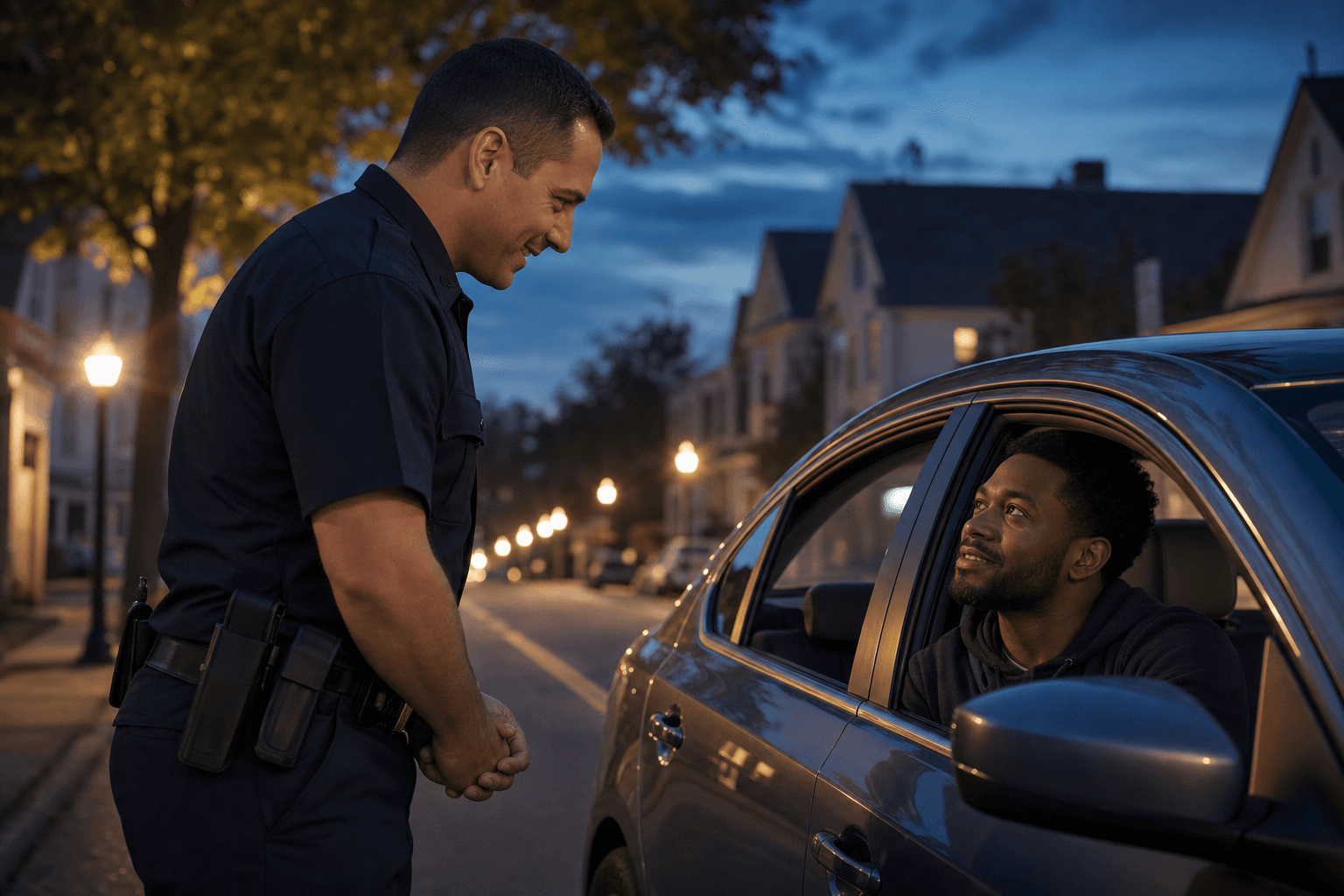
Ask almost anyone to describe their last conversation with a police officer and you will hear the same story: a traffic stop. It was short. It was unplanned. It was a little tense before a word was even spoken. And whatever happened in those few minutes became, for that person, the answer to a much bigger question about what the police are like.
Now multiply that by every stop a department makes in a year. The routine traffic stop turns out to be the single largest driver of how a community feels about its police, and for most of the history of the profession it has also been the least examined thing an agency does. The Charlottesville Police Department, a municipal agency in Virginia, decided that was worth fixing.
The most common contact is the least visible one
Walk into any command staff meeting and you will find rich data on the rare events. Use of force gets reviewed frame by frame. Complaints get logged and investigated. Pursuits get reconstructed second by second. The one thing nobody has data on is the encounter that happens thousands of times a year and ends with a warning and a wave.
That encounter leaves no trace of how it felt to the person in the driver's seat. Did the officer explain why the stop happened? Did they let the driver speak? Did the whole thing feel fair, or did it feel like something being done to a person for reasons they were never told? Those questions have real answers, and until recently no chief had a way to collect them.
The gap matters because of what decades of procedural justice research keeps finding. People judge a police encounter far more by how they were treated than by whether they walked away with a ticket. A driver who gets a citation from an officer who was clear and respectful often trusts the police more afterward, not less. If you want to improve that experience, you have to measure it at the level of the interaction itself, which is precisely the thing almost no department has been equipped to do.
Measuring the encounter, not just the enforcement
Charlottesville adopted Guardian Score, which was built to sit outside the technical stack of a police department entirely. There is no IT integration, no records system to connect, and no app for officers to learn. Officers carry single-use interaction cards that Guardian Score designs, prints, and ships, and they hand one over at the end of a routine encounter, including a traffic stop.
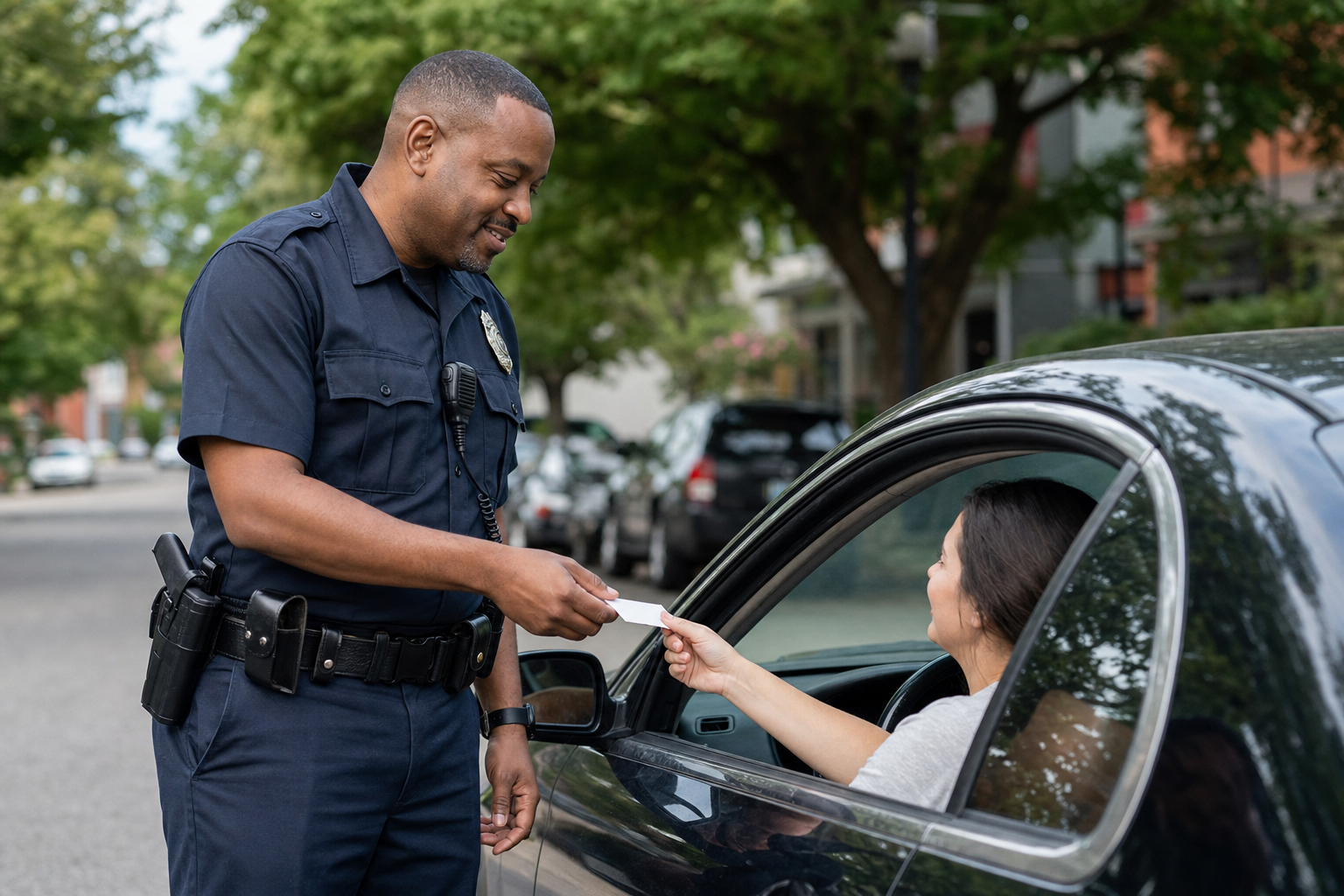
The entire program fits on a card handed over at the end of a stop. The rest happens on the driver's phone.
The community member scans the QR code and completes an anonymous survey that takes about sixty seconds. It asks about five procedural justice behaviors: whether the officer explained why the stop happened, whether they listened, whether they acted fairly, whether they stayed professional, and whether they explained what happens next. Because each card works exactly once and is physically handed over at the scene, every response is anchored to a real encounter. There is no open web form for the internet to brigade.
The results flow into dashboards at the officer, squad, and department level, so a supervisor can watch how stops are actually landing with the public. Not as a stack of anecdotes, but as a trend line that moves. Across agencies on the platform, the average rating is 4.7 out of 5, and roughly two-thirds of surveys include written comments. It turns out the community has plenty it wants to say. It simply never had a channel to say it.
What leadership actually saw
The change Chief Michael Kochis describes is not a number on a dashboard. It is a change in how his officers carried themselves on the street.
What we started to see was more of a relational type of policing when it came to these traffic stops. Officers were just a little bit more personable.
Chief Michael Kochis, Charlottesville Police Department
"A little bit more personable" is a modest phrase for a real shift. Here is the mechanism behind it. When an officer knows the driver they just stopped will have a genuine chance to describe the encounter, the five behaviors on the survey stop feeling like an academic checklist and start becoming the natural shape of the conversation. You explain the reason for the stop. You give the driver a beat to respond. You close with clear next steps. None of that happens because anyone was ordered to change. It happens because the encounter is finally visible, and people behave differently when their good work can be seen.
This is the quiet logic of the guardian mindset. The same stop, run by the same officer, becomes a relationship instead of a transaction. Nothing about the enforcement authority changed. What changed is that the human part of the job started to count.
Coaching early instead of investigating late
The second half of the Charlottesville story is what happens when the feedback is not glowing. This is the part chiefs tend to lean forward for, because it is where trust data either earns its place or becomes another dashboard nobody opens. Chief Kochis describes a loop that runs on expectations rather than discipline.
Guardian Score helps maintain expectations. If there are concerns, supervisors can review body-worn camera footage to understand what's happening and make adjustments before issues escalate.
Chief Michael Kochis, Charlottesville Police Department
Follow the sequence carefully. Community feedback surfaces a concern on a particular officer or a particular kind of stop. A supervisor pulls the body-worn camera footage, not to build a case, but to see what is actually happening out there. Then comes a conversation and a small adjustment, long before anything rises to the level of a formal complaint, an internal affairs file, or a clip on the local news.
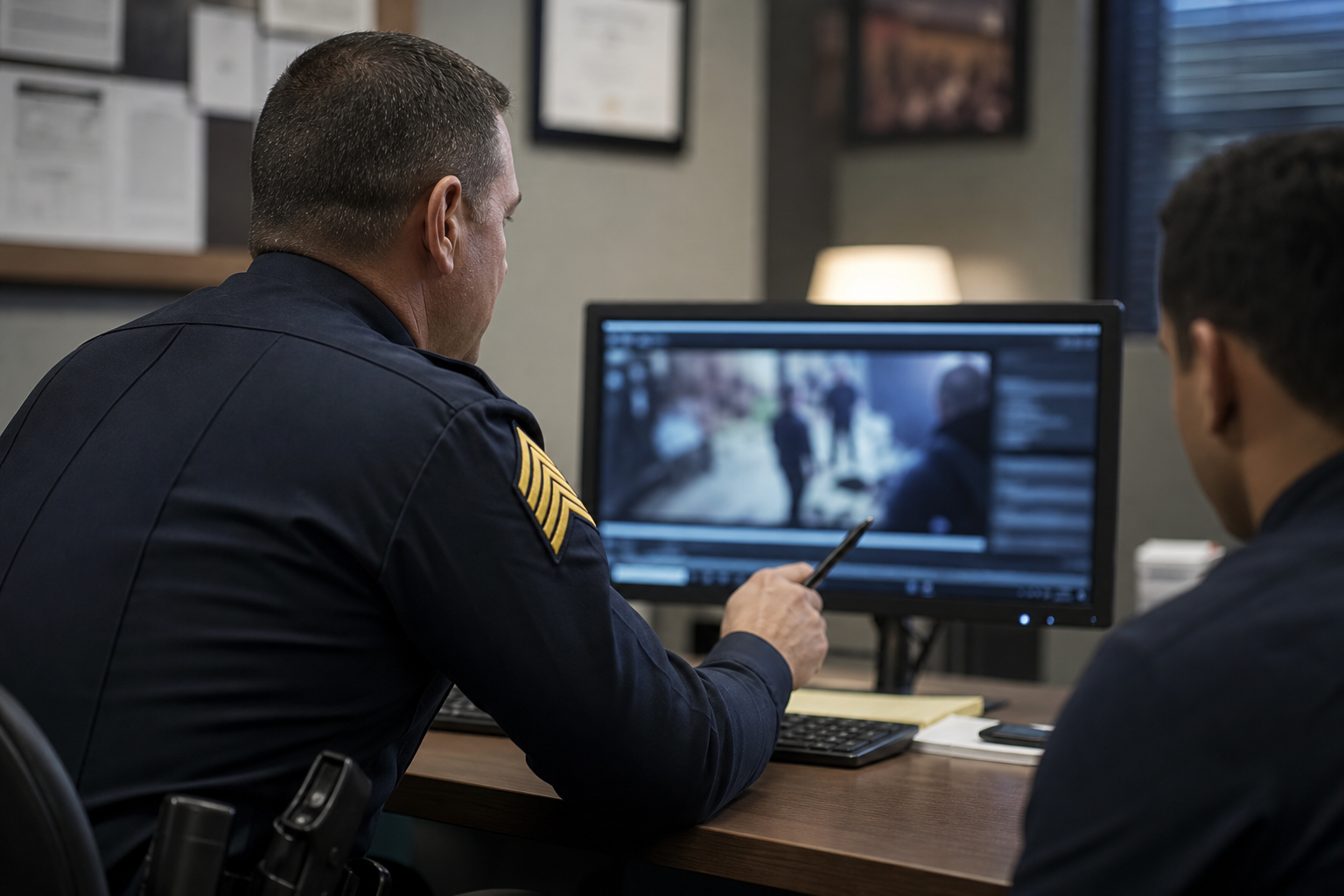
Feedback tells a supervisor where to look. Footage shows what happened. Together they turn a drift into a coaching conversation.
That is early intervention in its healthiest form. Traditional early intervention systems key off red flags like use-of-force counts and complaint totals, which means they can only trigger after something has already gone wrong. Trust data moves the trigger earlier. A slow drift in how an officer's stops are landing becomes a coaching moment while it is still just a drift, not an incident.
For officers, that is a far better deal than the alternative, and it is worth saying plainly because officers are the ones who have to live with the tool. A quiet adjustment from a sergeant who watched the footage is protection. It is the difference between a two-minute conversation now and a complaint file later. The system is not a trap. It is an early warning that keeps small things small.
The loop runs both ways
Here is the part that gets lost when people assume any measurement system is really about catching failure. The same data that flags a concern also captures everything going right, and in Charlottesville most of the data is going right.
Officers whose stops consistently earn high marks and warm comments finally have proof of work that used to vanish the moment the taillights disappeared. Nobody files a report about a traffic stop that went well. Nobody writes a commendation because an officer was patient and clear with a nervous driver at eleven at night. That work was real, and it was invisible, and now it is documented. That kind of evidence feeds recognition and retention rather than only discipline files, and in a hiring market this brutal, giving good officers a record of their good days is not a soft benefit. It is a retention strategy.
What other agencies can take from Charlottesville
You do not need to be Charlottesville to run this play. A few lessons transfer to an agency of any size.
- Start with the traffic stop. It is your highest-volume community contact and the encounter most shaped by procedural justice behaviors. If measurement is going to change anything, it will show up there first and fastest.
- Expect behavior to shift before the data does. The act of handing over a feedback card changes the tone of the encounter on its own, before a single survey comes back. Measurement is not a thermometer. It is an intervention.
- Pair feedback with body-worn camera review. Feedback tells you where to look. Footage tells you what is happening. Used together, supervisors coach on patterns instead of reacting to isolated incidents.
- Frame it as maintaining expectations, not catching failures. Chief Kochis's language is deliberate, and it matters. The system exists to keep good habits visible and small concerns small, and officers can feel the difference between those two framings immediately.
The honest takeaway is not that Charlottesville found a silver bullet, because there is no silver bullet in this work. It is that when the most common police encounter finally became visible, the officers rose to meet it, and their supervisors gained a way to help them before anything escalated. The traffic stop was always shaping the community's trust. Now it is doing that work on purpose.
Want to see what your department's traffic stops look like through your community's eyes? Book a 20-minute demo and we will walk you through how agencies like Charlottesville put verified feedback to work.
Frequently asked questions
How did community feedback change traffic stops in Charlottesville?
Chief Michael Kochis says the department began to see a more relational type of policing on traffic stops, with officers becoming a little more personable, once everyday encounters were measured through Guardian Score's verified community feedback.
How does the feedback-to-coaching loop work at Charlottesville Police?
According to Chief Kochis, the system helps maintain expectations. When feedback raises a concern, supervisors review body-worn camera footage to understand what actually happened and make an adjustment before the issue escalates, coaching early instead of investigating late.
What do drivers actually rate after a traffic stop?
The driver scans a single-use QR interaction card and completes an anonymous survey in about sixty seconds, rating five procedural justice behaviors: explaining why, listening, fairness, professionalism, and explaining next steps. Across agencies using Guardian Score, the average rating is 4.7 out of 5 and roughly two-thirds of surveys include written comments.
Does measuring traffic stops add work for officers?
No. Officers hand over a pre-printed card at the end of a stop, and everything after that happens on the community member's phone. There is no form to file, no app to open, and no software to integrate. The card is the entire footprint.