

Every police chief in America is asked to build community trust. Almost none of them are handed a way to measure it. That is a strange gap when you say it out loud, because we measure everything else that matters in policing.
Crime has CompStat. Response times have CAD reports. Use of force has review boards and dashboards. But trust, the one outcome that city councils, community boards, and accreditation bodies ask about more than any other, still gets assessed through anecdotes, complaint tallies, and the occasional annual survey. That is a real problem, and not just a philosophical one. You cannot manage what you cannot measure, and you cannot credibly claim progress on a goal you never defined. When the council asks how trust-building is going and the honest answer is a feeling, the chief loses the room.
The good news is that community trust is measurable, and it has been for a while now. Departments across the country are already doing it at the level of individual interactions, without adding a task to an officer's day or requiring a single IT integration. This article lays out a framework any agency can put to work, starting this quarter.
Why complaint counts are not a trust metric
Most departments default to the data they already have on hand: formal complaints, commendations, and lawsuit exposure. It is understandable, because that data is sitting right there. It is also close to useless as a trust metric, for a reason worth being precise about.
According to the Bureau of Justice Statistics, U.S. residents have tens of millions of contacts with police every year, and the overwhelming majority involve no use of force and generate no paperwork at all. Complaints capture a sliver of the small fraction of interactions that went badly. They tell you nothing about the enormous majority that went fine, and nothing about how any of it actually felt to the person on the other side. A department can drive complaints to zero and still be quietly losing the community's confidence, one forgettable, cold, unexplained encounter at a time. Complaints are a lagging, negatively skewed signal. They are a smoke alarm, not a thermostat.
Annual community surveys have the opposite problem. They measure general sentiment, some version of "do you trust the police," rather than lived experience, some version of "how did the officer treat you during your traffic stop last Tuesday." General sentiment is dominated by national news cycles that a local chief does not control and cannot move. Interaction-level experience, on the other hand, is shaped entirely by your officers, which means it is the part you can actually manage.
So a real trust metric needs three properties, and it is worth holding any approach up against all three.
- It measures experiences, not opinions. The feedback has to be tied to a real, verified interaction, not an open web form that anyone with a grievance can fill out ten times.
- It measures the behaviors that drive trust. Decades of research point to procedural justice as the strongest predictor of whether people view the police as legitimate, so those are the behaviors to score.
- It produces data at the officer, squad, and department level. A single department-wide number is a press release. Officer-level trends are a management tool.
The five measurable behaviors of trust
Research from the Yale Justice Collaboratory and many others keeps landing on the same finding: people judge a police encounter far less by its outcome, ticket or warning, arrest or release, than by the fairness of the process that got them there. This is procedural justice, and the reason it is so useful to a chief is that it is not an abstraction. It breaks cleanly into concrete behaviors a community member can recognize and rate in under a minute.
1. Explaining why
Did the officer explain why the stop or contact was happening? People do not walk around knowing police procedure. A thirty-second explanation turns an encounter from something being done to a person into something they understand, and understanding is where trust starts.
2. Listening
Did the community member get a real chance to share their side? Active listening is the clearest signal of respect an officer can send, and it is the single trait residents mention most often in written feedback, by a wide margin.
3. Fairness
Was the action taken proportionate to the situation? This is the one that surprises skeptics: even people who receive a citation rate the interaction positively when the enforcement felt consistent and even-handed. The ticket is not the problem. Arbitrariness is.
4. Professionalism
Tone, word choice, body language, demeanor. This is the behavior most visible on body-worn camera, and it is the one that most shapes how the story gets retold at the dinner table that night, which is where a community's reputation of its police is actually built.
5. Explaining next steps
Did the encounter end with the person knowing what happens next? A court date, a follow-up, an available service. Ending with clarity ends the interaction on the strongest note available, and it costs nothing.
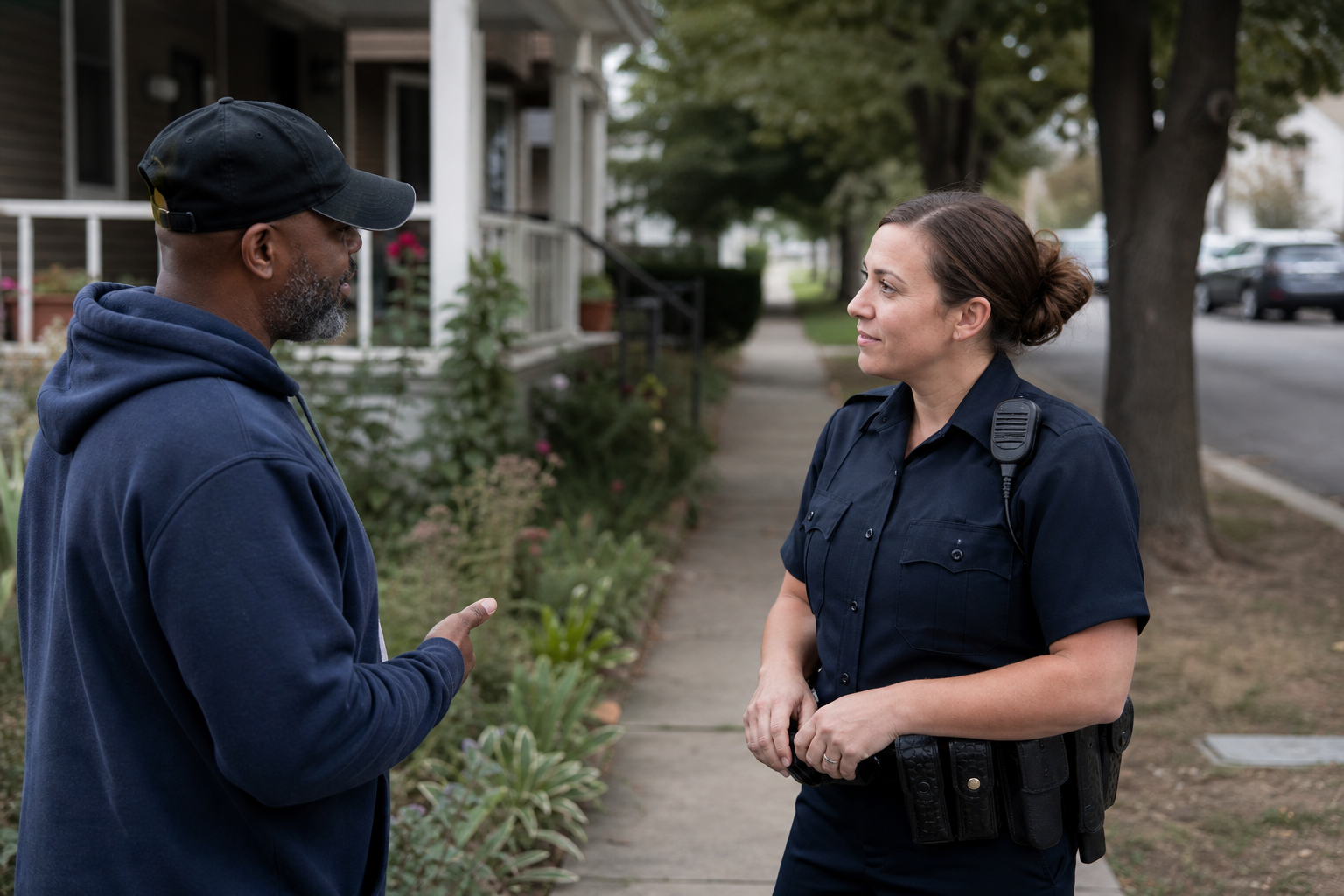
The five behaviors are not abstract virtues. They are things a resident can notice in a single encounter and rate honestly.
Score those five behaviors across thousands of verified interactions and you have something no complaint log will ever give you: a longitudinal, officer-level trust dataset that reflects the whole of what your department does, not just its worst days.
Verification: the difference between data and noise
Here is the objection every command staff raises, and they are right to raise it. Will an open feedback system just collect rants from people who are already angry?
Yes. If it is open, that is exactly what you will get. Which is why verification is not a nice-to-have. It is the single most important design decision in trust measurement, and it is where most well-meaning efforts quietly fail. When feedback can only be submitted by someone who was actually part of an interaction, for example through a unique, single-use QR code that the officer hands over at the scene, every response maps to a real encounter. There is no brigading, no bot traffic, and no anonymous grudge from someone the officer never met.
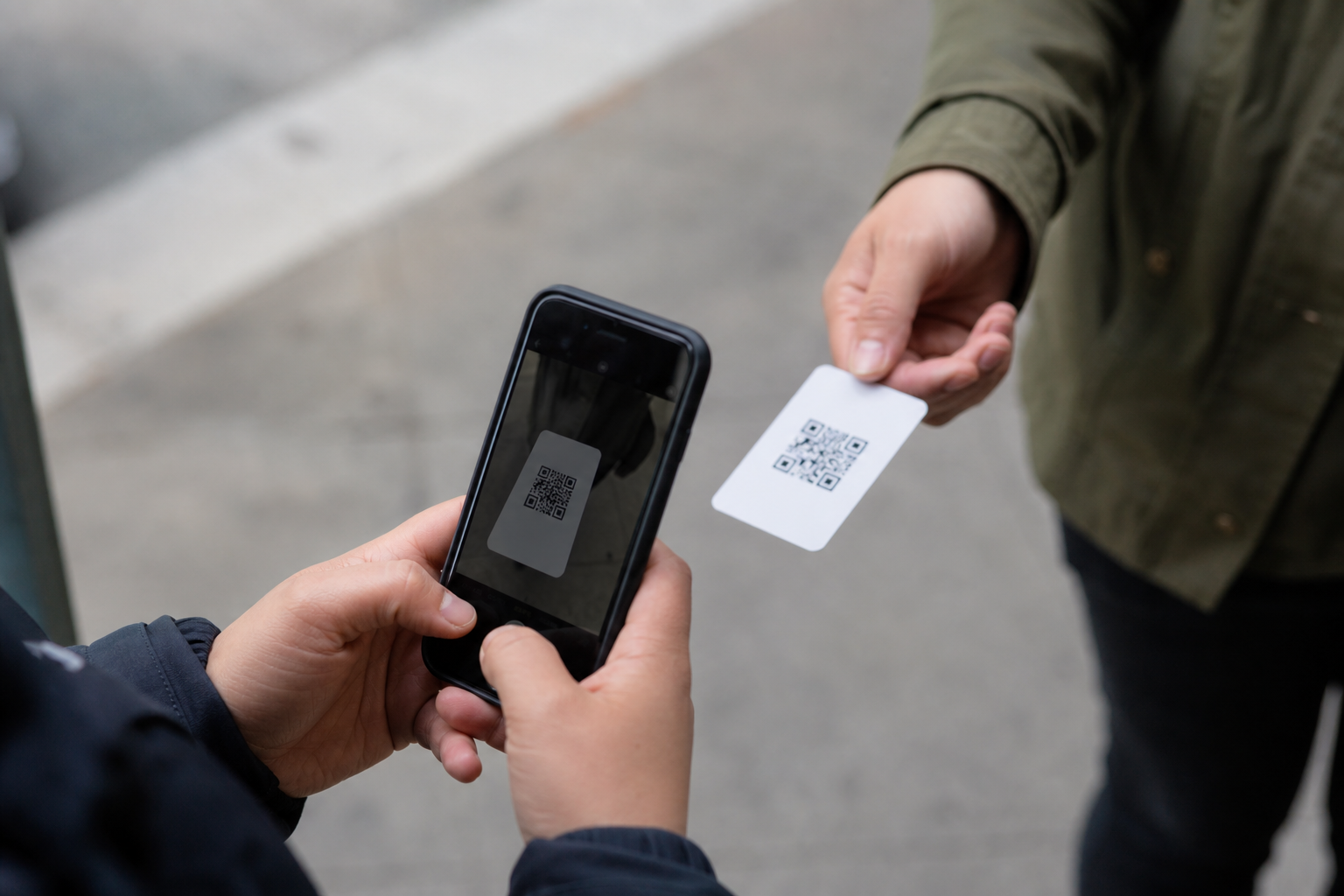
A single-use card handed over at the scene is what separates verified trust data from an open comment box anyone can flood.
Departments that use verified, interaction-card-based feedback run into a pattern that reliably surprises skeptical command staff: the overwhelming majority of ratings are positive, and roughly two-thirds of respondents leave written comments. It turns out community members have been waiting for a legitimate way to say "this officer treated me well." Nobody drives to city hall to file a form about a good traffic stop. But hand them a sixty-second anonymous survey at the moment it happened, and they will tell you.
Anonymity is the other half of the equation. Respondents provide no personally identifiable information. That protects the community member, protects the department's FOIA posture, and removes the fear, on both sides of the encounter, that feedback will be turned into a weapon. Verified and anonymous are not in tension. Together they are what make the data both trustworthy and safe to collect.
From measurement to management
Once trust data flows in continuously, it stops being a report you generate once a year and starts being something closer to an operating system for how you run the department. A few of the uses we see most often in the field:
- Baseline, then trend. Your first 90 days establish a department baseline across the five behaviors. From that point on, the question in the command staff meeting changes. It goes from "how do we feel about community relations?" to "listening scores in District 2 dropped four points this quarter, so what is going on there?" That is a fundamentally different meeting.
- Coach on patterns, not incidents. A single mediocre rating means nothing, and you should say so to your officers plainly, because it protects them from overreaction. A three-month downward trend in one officer's fairness scores, though, is a coaching conversation that happens before a complaint, a lawsuit, or a viral clip. This is early intervention built on trust data rather than on red flags that only fire after the damage is done.
- Recognize in public. Officers with sustained high scores and glowing community comments finally have documentation of the work that never made it into any report. Recognition backed by real community data lands very differently than a supervisor's opinion, and it is one of the cheapest retention tools a chief has.
- Report with credibility. When the council asks how trust-building is going, a chief with verified interaction data can show the answer instead of asserting it. The same analytics tend to satisfy accreditation standards that call for documented community feedback mechanisms, so the reporting does double duty.
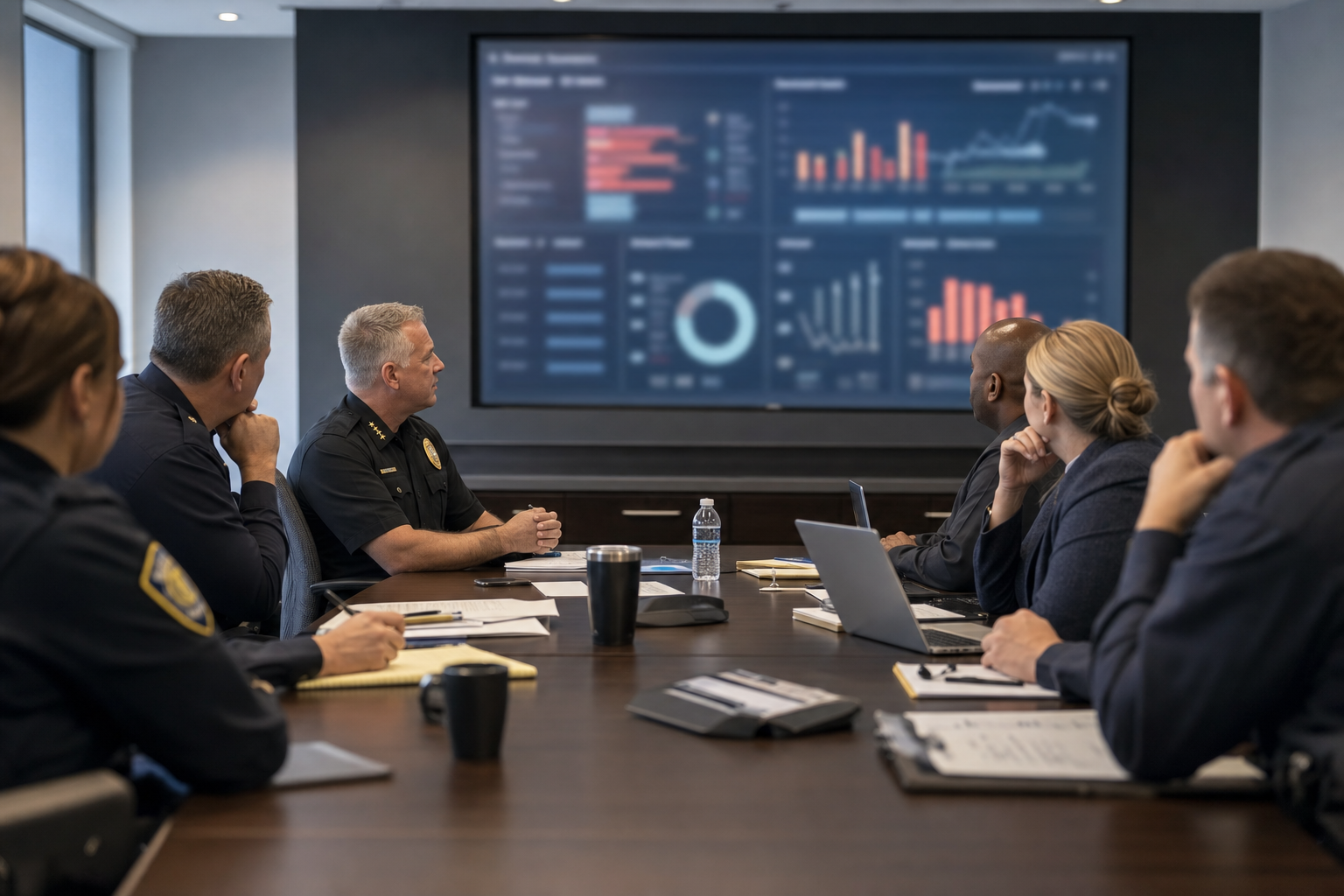
Officer-level trends turn the command staff meeting from a debate about feelings into a conversation about specific, movable numbers.
Getting started: a 90-day measurement plan
You do not need a task force, a new budget line, or a year of planning to begin. A realistic first quarter looks like this.
Weeks 1 to 2, define and configure. Adopt the five procedural justice behaviors as your trust metrics. Set up your officer rosters and squads. Print the interaction cards. There is no IT project here; a browser and an email address are the entire technical footprint, which is worth repeating to anyone on your team who assumes this will be a systems headache.
Weeks 3 to 4, soft launch. Start with one or two units, ideally led by supervisors who volunteered rather than ones who were volunteered. Set one explicit expectation: cards go out at the end of routine interactions, including traffic stops, calls for service, and community contacts. Keep the ask that simple.
Days 30 to 90, build the baseline. Aim for your first ten surveys inside the first thirty days, then steady weekly volume after that. Review the results inside a meeting you already hold rather than inventing a new one. And share the early positive comments with the whole department, because the fastest way to convert a skeptical officer is to show them the community, in its own words, saying thank you.
Day 90, report. You now have something virtually no neighboring agency has: a quantified, verified baseline of community trust, broken out by behavior, by unit, and by trend. Every quarter after that one is simply a progress report against a number you can defend.
Trust is a number now
For decades, community trust lived in the same category as morale. Important, talked about constantly, and measured never. That era is ending, and it is ending faster than most agencies realize. The departments that measure trust will be the ones that define what good looks like for the rest of the profession. The ones that do not will keep answering the hardest questions they face with anecdotes, and hoping the anecdotes hold.
Guardian Score was built to make this measurable: verified feedback, procedural justice metrics, and real-time analytics at the officer, squad, and department level, live in weeks rather than years. Book a demo and we will show you what a trust baseline would look like for your agency.
Frequently asked questions
Can community trust in police actually be measured?
Yes. By collecting verified, anonymous feedback after real interactions and scoring the five procedural justice behaviors, which are explaining why, listening, fairness, professionalism, and next steps, departments build a longitudinal trust dataset at the officer, squad, and department level.
Why don't complaint counts measure community trust?
Complaints capture only a small fraction of the interactions that go wrong and none of the ones that go right, so they are lagging, negatively skewed indicators rather than a measure of how the community experiences everyday police contact.
How long does it take to establish a trust baseline?
Most agencies establish a department baseline in about 90 days: roughly two weeks of setup, a soft launch with one or two units, then steady survey volume reviewed inside existing meeting cadences.
Won't an open feedback system just collect complaints from angry people?
It would if it were open. That is exactly why verification matters. When feedback can only be submitted by someone who was part of a real interaction, through a single-use code handed over at the scene, there is no brigading and no anonymous grudges, and the data reflects the full range of encounters rather than only the bad ones.