
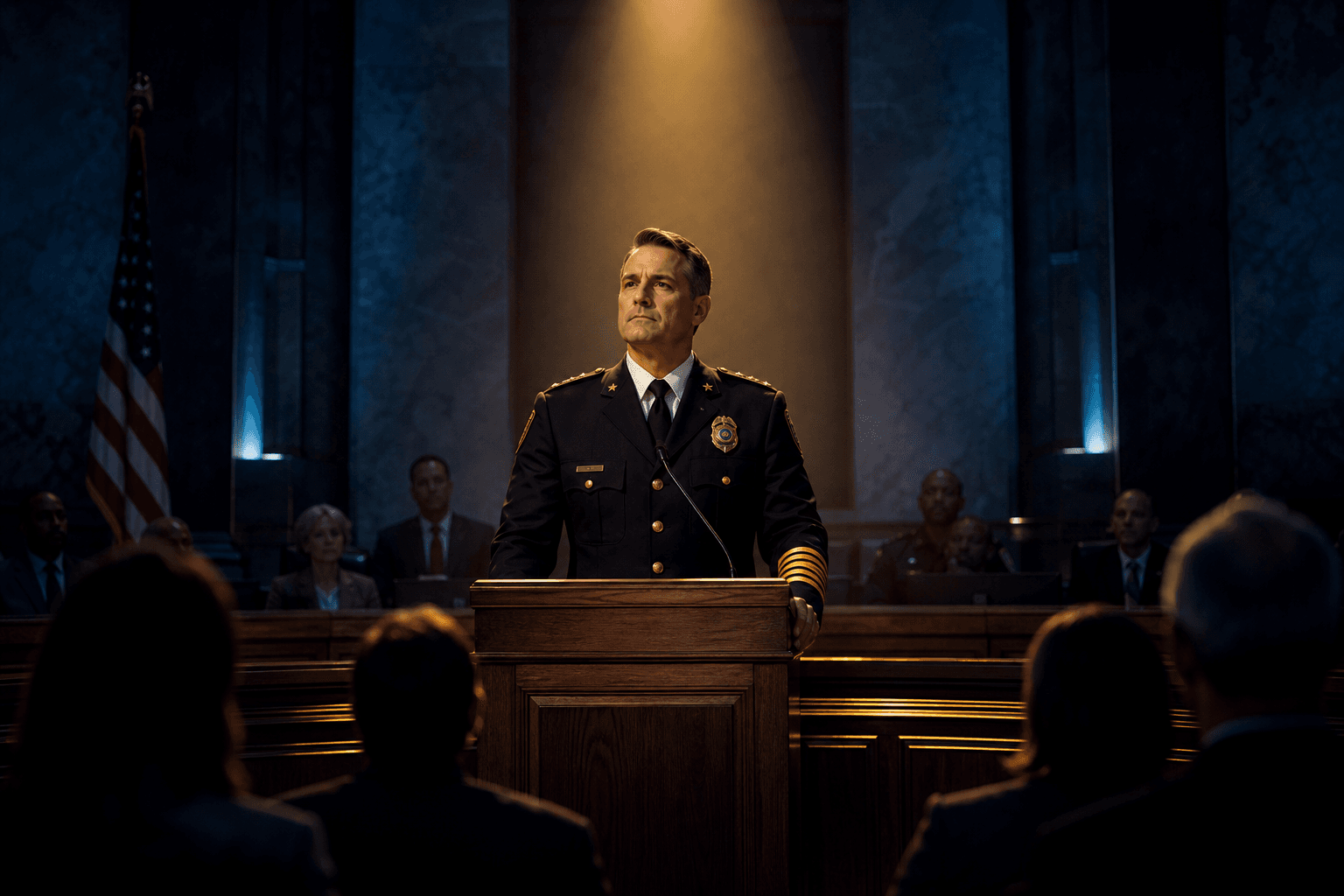
Picture a city council meeting on a Tuesday night. The chief has just walked through the quarterly numbers. Crime down in two categories, up in one, response times holding steady. Then a council member leans into the microphone and asks a question that is not on any slide.
"Chief, are your officers doing a good job?"
Watch what happens next. The chief reaches for the tools on hand. Crime is down. Complaints are manageable. We ran four community events last quarter. The council member nods, unsatisfied, because everyone in the room knows those numbers answer a different question. Crime statistics describe what criminals did. The council member asked what officers did. How they treat people. Whether the community trusts them. Whether the department is getting better or worse at the human part of the job.
And the honest answer, in most agencies in America, is that we do not measure that.
The question is fair, and the silence is expensive
Let me defend the council member for a moment, because chiefs sometimes hear this question as an attack. It is not. It is the most reasonable thing civilian oversight can ask. Cities spend a third or more of their general fund on policing. The people paying for it are entitled to know whether the service is good. Not just whether crime went down, which turns on dozens of factors outside any department's control, but whether the officers themselves are performing well.
The federal government said as much a decade ago. The President's Task Force on 21st Century Policing recommended that agencies "should track the level of trust in police by their communities just as they measure changes in crime" (Recommendation 1.7). Accreditation bodies agree. CALEA requires a documented citizen-attitude survey at least every two years, something I covered in CALEA accreditation and community feedback.
Yet when the question comes, most chiefs are left holding proxies. Complaint counts, which capture a sliver of what goes wrong and nothing of what goes right. Anecdotes, like the thank-you letter someone forwarded last month. Gut feel, the quiet confidence that I know my people and they are good. All of it sincere. None of it evidence. And in a skeptical room, an unmeasured claim sounds a lot like an evaded question.
The part that bothers me most: the invisible finest moments
Here is the emotional core of this, and it is about officers, not politics.
Somewhere in your department this week, an officer talked a suicidal teenager back from a bridge railing. Another spent forty minutes with a confused elderly man until his daughter arrived, and made him laugh while they waited. Another took a breath during a hostile traffic stop and explained, calmly, for the third time, why the driver had been pulled over, and the driver, still annoyed, drove away a little safer and a little more fairly treated than he expected.
None of that exists, administratively speaking. There is no report for grace under pressure. No database field for kindness. The moments that represent the very best of your people, the reason most of them took the job, evaporate the second they end. When I was a police officer, I felt this personally. The encounters I was proudest of were precisely the ones no one would ever know about.
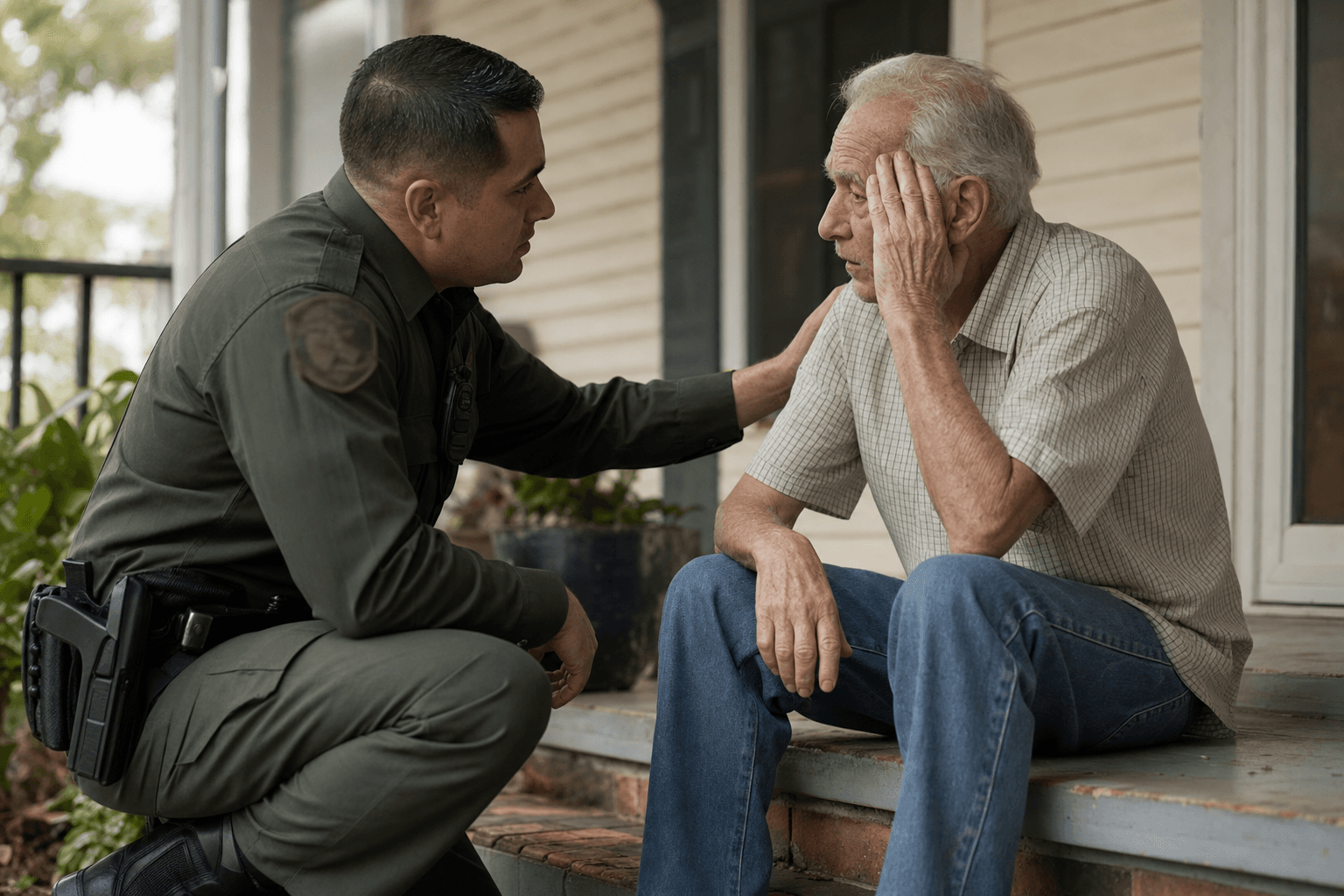
The finest moments in policing are the ones no report was ever built to capture.
So when a chief cannot answer whether officers are doing a good job, the failure is not only political. It is a failure of justice toward the officers themselves. Their worst moments are recorded, reviewed, and litigated. Their finest moments are invisible. That asymmetry, every mistake documented and every excellence lost, is quietly corrosive, and I believe it is one overlooked driver of the morale and retention crisis the profession is living through.
What the answer looks like with evidence
Now imagine the same meeting, the same question, but the chief runs a department that measures trust at the interaction level. Verified, anonymous feedback collected after real encounters through interaction cards, scored on the procedural justice behaviors that research says drive legitimacy: explaining why, listening, fairness, professionalism, next steps.
The chief pulls up a single slide from the analytics dashboard and says:
"This quarter our officers were rated by the community members they actually served, after traffic stops, calls for service, everyday contacts. Our average rating is above 4.5 out of 5. About two-thirds of respondents wrote comments, and most of them name a specific officer doing something right. Our listening scores improved in two districts and dipped in one, and we are already coaching on it. And here are three of those comments, read verbatim, from residents describing what our officers did for them."
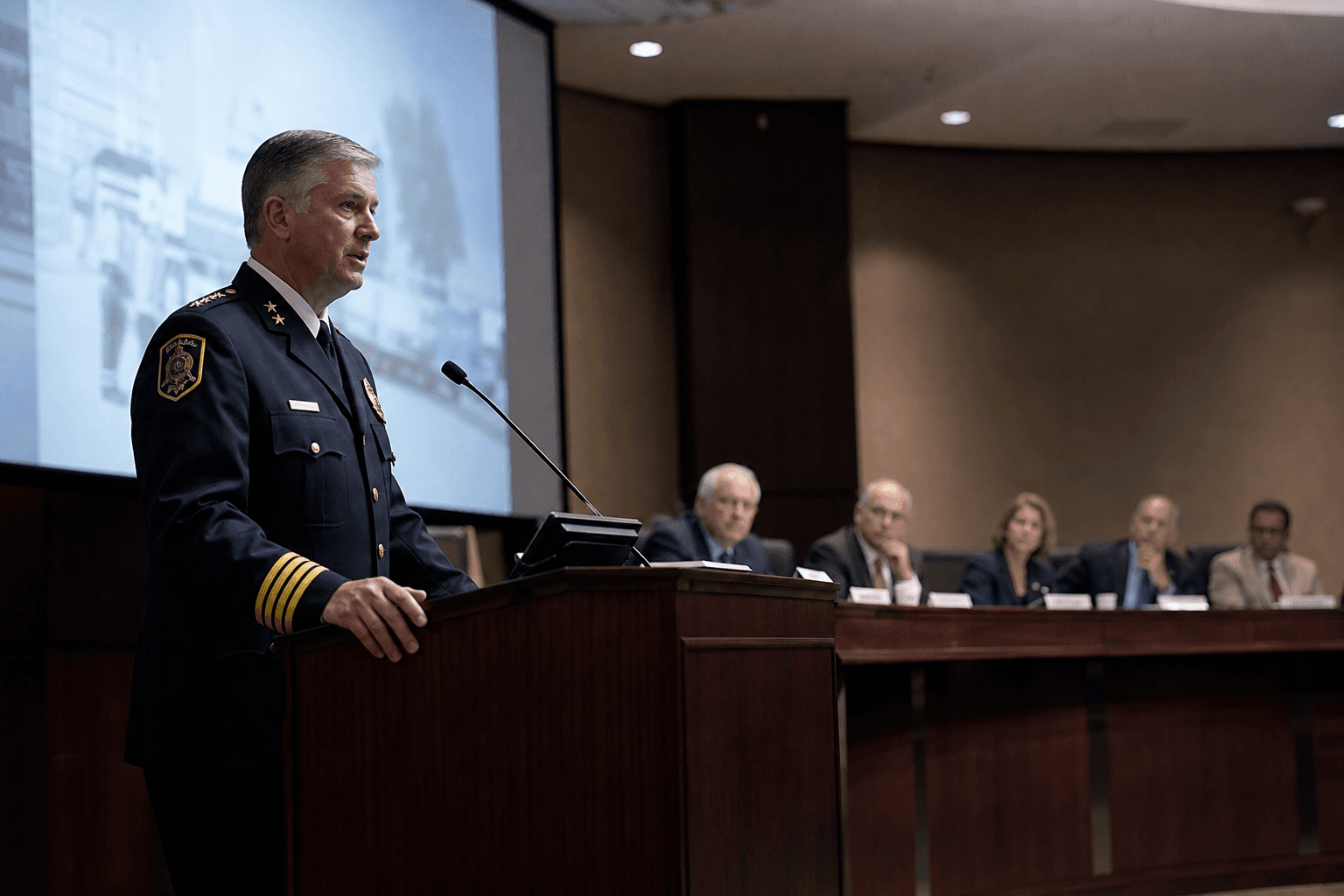
Baseline, trend, and residents' own words: the same evidentiary standard chiefs already apply to crime.
That is not spin. It is the same standard the chief already applies to crime: baseline, trend, evidence. Across agencies using Guardian Score, community members rate their interactions 4.7 out of 5 on average, with more than 1.25 million community members served, and the written comments are the part that changes the room. Programs like Guardian Moments exist to surface exactly those stories, so the officer who spent forty minutes with a confused elderly man finally has a record of it.
Officers, it turns out, come around fast once the data starts arriving. Officer Molly Kimball of the Warrenton Police Department put it plainly: "At first we were skeptical. We thought it might bring more negative feedback. After using it, a lot of us really like it. It has been a positive experience for me and my colleagues."
What it feels like
Chiefs who make this shift describe the same thing. The council meeting stops being a defensive exercise. The hardest question in the room becomes the one you are best prepared for. You are no longer asserting that your officers are good. You are showing it, in the community's own words, with data nobody can accuse you of authoring. And inside the department, officers learn that the good work counts now. It is measured. It is seen.
That is what it feels like to answer with evidence. Every chief deserves it. So does every officer. A practical path to get there is laid out in how to measure community trust in policing.
What you can do Monday
Write the question at the top of a page, "are your officers doing a good job?", and underneath it list every piece of evidence your agency could produce today. Not activity numbers. Evidence about quality, from the community's perspective. If the list looks thin, share the page with your command staff and ask what it would take to fill it before the next budget season. That one exercise has started more trust-measurement programs than any RFP ever has.
Guardian Score gives chiefs the answer to the question: verified community feedback, officer-level trust data, and real comments you can read to the council. Book a demo and walk into your next public meeting with evidence.
Frequently asked questions
How should a police chief answer whether officers are doing a good job?
With interaction-level trust evidence: verified, anonymous community feedback collected after real encounters and scored on procedural justice behaviors. That produces baselines, trends, and written comments a chief can present the same way crime data is presented.
Why don't crime statistics answer questions about officer performance?
Crime statistics describe what offenders did, and they move with factors far outside any department's control. They say nothing about how officers treat people during the millions of everyday encounters where trust is built or lost.
Are police departments expected to measure community trust?
Yes. The President's Task Force on 21st Century Policing recommends agencies track trust in police just as they measure changes in crime, and CALEA Standard 2.6.5 requires accredited agencies to document a citizen-attitude survey at least every two years.