

"There is no budget for that" is the sentence that quietly kills more community-engagement projects than any city council ever does. Every chief has heard it, and most have said it. Here is the part that gets missed: when the project is community-feedback or trust-measurement technology, that sentence is usually wrong. This category is inexpensive by public-safety standards, and it fits inside a surprising number of funding streams that agencies already qualify for. The money is rarely the real obstacle. The real obstacle is that almost nobody takes the time to map their project onto the funding that exists.
That mapping is the whole job, and it is learnable. Below are seven funding channels that can pay for police community engagement technology, from federal programs with published award ceilings to local sources most agencies never think to ask. One rule applies to every one of them, so I will say it once here and mean it throughout: amounts, categories, and deadlines change every cycle. Treat the figures in this article as orientation, not gospel, and confirm current terms on the official program site before you plan around a single number.

Most engagement projects stall at the funding question. The work is matching the project to the right program, not inventing new money.
1. DOJ COPS Community Policing Development (CPD) microgrants
What it funds: Community-policing and community-engagement initiatives, including pilots, demonstration projects, and capacity building. Awards run up to $175,000, and in a recent cycle the COPS Office made 63 awards, a meaningful share of them to small and mid-sized agencies.
Who qualifies: Local, state, tribal, and territorial law enforcement agencies. Partnerships with a university, a nonprofit, or another agency tend to strengthen an application rather than complicate it.
How feedback technology fits: This is the most natural home for a community-feedback pilot that exists. A verified post-interaction feedback system with measurable trust outcomes is precisely the kind of project the program was designed to fund. The strongest narratives connect the pilot to the President's Task Force on 21st Century Policing, Recommendation 1.7, which urges agencies to track community trust the way they already track crime. If you are seriously considering this route, we wrote a full step-by-step guide to COPS microgrants that covers narrative structure, budget justification, and the mistakes that draw rejections. Program details live at cops.usdoj.gov/grants.
2. COPS Hiring Program (CHP)
What it funds: Sworn officer positions, at up to $125,000 per position spread across three years.
Who qualifies: Agencies hiring or rehiring career law enforcement officers.
How feedback technology fits: Indirectly, but with real force. Every CHP application requires a community-policing plan, and applicants have to describe how the new officers will advance it. An agency that can point to an operating trust-measurement system, or that proposes one as part of the plan, writes a far more concrete application than one describing community policing in the abstract. The grant pays for the officers. The feedback data is what proves the community-policing plan is more than a paragraph. When a reviewer can see that you already measure how the public experiences your officers, "we will do community policing" stops being a promise and starts being a track record. Details at cops.usdoj.gov/grants.
3. LEMHWA officer wellness grants
What it funds: The Law Enforcement Mental Health and Wellness Act program funds officer wellness work, including peer support, mental-health resources, and program development.
Who qualifies: Law enforcement agencies. Check the current solicitation for the year's specific priorities.
How feedback technology fits: The connection runs through morale, and it is stronger than most chiefs expect. For a lot of officers, the only structured feedback of an entire career is negative: complaints, internal investigations, the occasional lawsuit. Verified community feedback inverts that pattern. On the Guardian Score platform, ratings average 4.7 out of 5 and roughly two-thirds of surveys include written comments, most of them appreciative. Structured, positive, name-attached recognition is a genuine wellness intervention, not a soft one. A LEMHWA narrative that pairs crisis response with recognition infrastructure, alongside the retention case laid out in our piece on officer recognition and retention, reads as a complete wellness strategy rather than a partial one. Details at cops.usdoj.gov/grants.
4. State criminal-justice grant programs
What it funds: Every state administers criminal-justice funding, usually a mix of federal pass-through dollars and state appropriations, covering training, technology, and community-relations initiatives. Categories and dollar amounts vary widely by state and by year.
Who qualifies: Agencies within the state. Requirements differ, so the first phone call matters more than the first form.
How feedback technology fits: State administering agencies frequently run community-trust, transparency, and accountability categories, and feedback systems sit squarely inside them. State cycles are often less competitive than federal ones, the paperwork is usually lighter, and the program officers are reachable by phone in a way federal staff rarely are. Find your state administering agency, call, and ask a direct question: which categories are open this year, and where would a community-feedback project fit. You will learn more in that ten-minute call than in an afternoon of searching.
5. Highway-safety grant programs
What it funds: State highway-safety offices fund traffic-enforcement and traffic-safety projects, typically using federal pass-through dollars.
Who qualifies: Agencies that conduct traffic enforcement. You apply through your state highway-safety office.
How feedback technology fits: Traffic stops are the single most common point of contact between police and the public, and enforcement campaigns rise or fall on whether the community accepts them as fair. Collecting verified feedback after stops, so you learn how drivers actually experienced the encounter and not just how many citations were written, gives a highway-safety application a legitimacy dimension that most of them lack entirely. A stop that ends with a feedback card produces safety data and trust data from the same encounter, which is exactly the kind of dual return that makes a reviewer's decision easy.
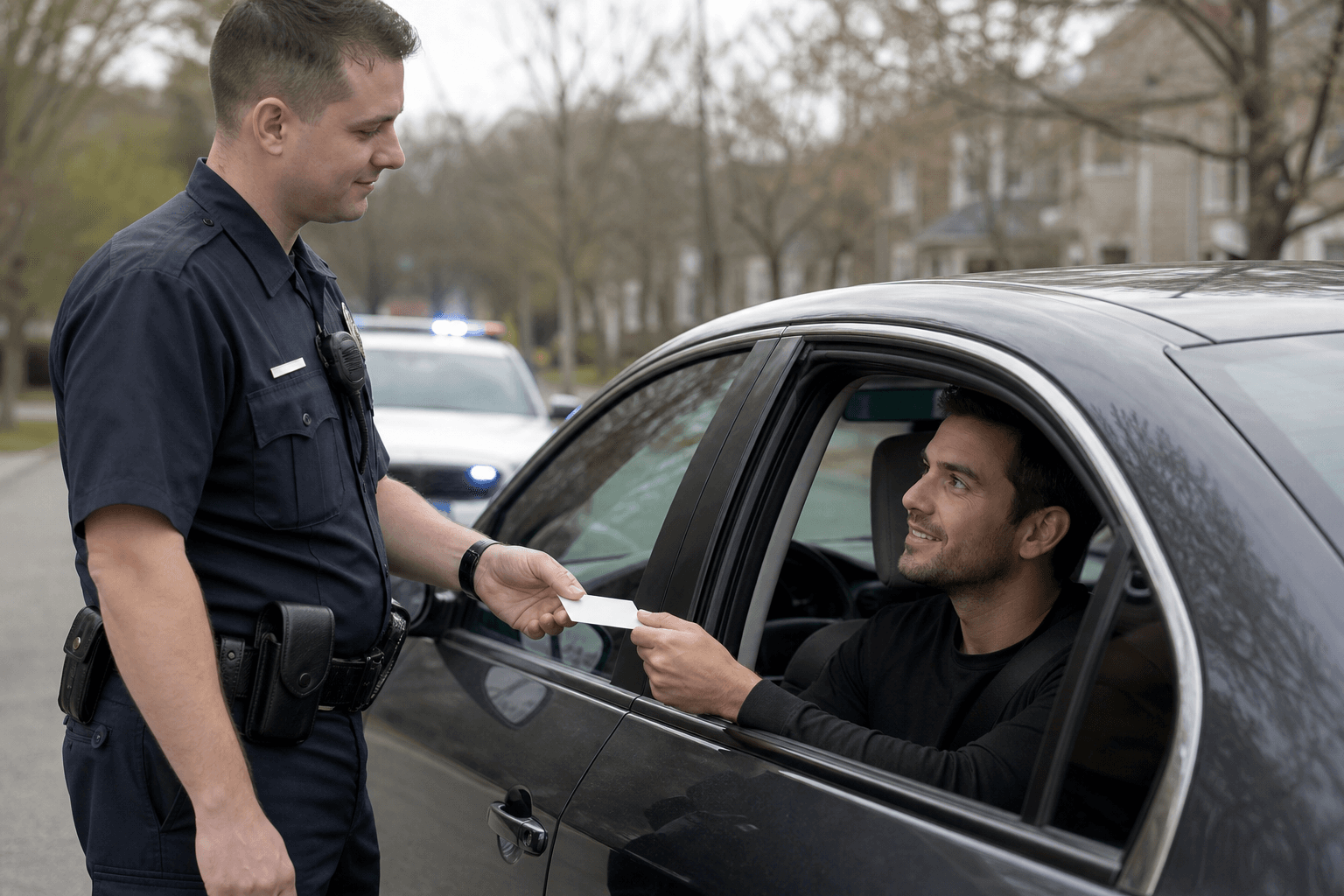
The same traffic stop can produce enforcement data and trust data, which is what lets one project satisfy two different funders.
6. Regional community foundations
What it funds: Community foundations fund local quality-of-life and civic-trust initiatives, usually in the tens of thousands of dollars.
Who qualifies: Often a nonprofit partner or a municipal entity, though many foundations fund city departments directly.
How feedback technology fits: Police-community trust is a civic-health issue, and foundations like to fund things they can watch working in their own backyard. A feedback pilot is unusually legible to a foundation board: residents rate real encounters, the results get published, and the community sees itself in the data. These awards are smaller than federal grants, but they move faster, they carry lighter reporting burdens, and they do something a first-time applicant badly needs. They give you a funded, documented result to cite in the federal application you write next year.
7. University research partnerships
What it funds: This is not a grant program in the traditional sense. It is a cost-sharing channel. Criminal-justice and public-policy researchers need field sites, and agencies need evaluation capacity and, sometimes, funded pilots to attach to a study.
Who qualifies: Any agency willing to share data and host a study.
How feedback technology fits: Interaction-level trust data is exactly what procedural-justice researchers want and almost never have access to. An agency that deploys measurable community feedback becomes an attractive partner overnight. Those partnerships often bring graduate-student analysis, independent evaluation that carries credibility your own dashboard cannot, and joint grant applications where the university shoulders most of the administrative load. For a small department without a grant writer on staff, that last point alone can be the difference between applying and not.
The seven channels at a glance
| Program | What it funds | Typical scale | Feedback-technology fit | | --- | --- | --- | --- | | CPD microgrants | Community-policing pilots | Up to $175,000 | Direct: fund the feedback system itself | | COPS Hiring Program | Officer positions | Up to $125,000 per position over 3 years | Indirect: strengthens the required community-policing plan | | LEMHWA | Officer wellness programs | Varies by cycle | Recognition-based morale and wellness component | | State criminal-justice programs | Training, technology, community relations | Varies by state | Direct: trust and transparency categories | | Highway-safety programs | Traffic enforcement and safety | Varies by state | Traffic-stop feedback as a legitimacy component | | Community foundations | Local civic initiatives | Smaller, faster awards | Direct: a visible local trust pilot | | University partnerships | Research collaboration, cost-sharing | Varies | Data partnership plus university-led evaluation and grants |
How to sequence a funding search
If you are starting from zero, resist the urge to apply everywhere at once. Applications you rush are applications you lose. A practical order for most agencies looks like this.
Start with the COPS CPD cycle, because it is the cleanest fit and the strongest signal of intent. While you wait on that timeline, call your state administering agency and ask what is open this quarter; state money is faster and less crowded, and it can fund a pilot you later scale with federal dollars. In parallel, open a conversation with a regional foundation or a nearby university, since those relationships move on their own clock and cannot be rushed into a deadline. The goal is a portfolio, not a single bet.
Whatever channels you pursue, the core of the narrative barely changes. Reviewers across all seven want the same three things: measurable trust outcomes, authentic community voice, and a credible plan to sustain the work after the grant ends. State it plainly, back it with a method you can actually run, and show that you thought about the day the funding stops. Programs reward projects that can prove they worked, and a feedback system exists precisely to generate that proof.
The most expensive mistake in this whole process is not a rejected application. It is never applying because "there is no budget," when the budget was sitting in a solicitation the whole time.
Guardian Score helps agencies scope grant applications, from pilot design to the measurable trust outcomes reviewers look for. Get started.
Frequently asked questions
Which grant is easiest for a small police department to win?
No grant is easy, but COPS Community Policing Development microgrants and state criminal-justice programs are the most accessible: small agencies win them regularly and the project scale matches their capacity. Regional community foundations are the fastest-moving option when you need a pilot funded this quarter.
Can one project draw on multiple funding sources?
Often, yes. A foundation-funded pilot can become the evidence base for a federal application, and a university partnership can layer onto either one. The rule is simple: never bill the same cost to two funders, and disclose every source in each application.
Do these programs actually pay for software subscriptions?
Many do, when the technology directly serves the funded purpose. Check the allowable-cost rules in each solicitation, and frame your request as a measurable community-engagement initiative that happens to run on a platform, not as a software purchase.
How far ahead should a department start a grant application?
Give yourself at least eight to twelve weeks for a federal solicitation. Foundations and state programs can move faster, but the narrative, budget justification, and any required partner letters take longer than most chiefs expect, especially the first time through.