
Bring up anonymous ratings in a room full of command staff and you can watch the shoulders tense. Every officer in that room has seen what anonymity does online, where the loudest voice is usually the angriest one and nobody has to stand behind a single word they type. The instinct is reasonable. Hand strangers an anonymous channel to grade your officers, and you have built a machine for grievance.
Then tell the same room that every rating is tied to a real, verified encounter with a specific officer, no exceptions, and the mood changes. People lean in. They want to understand how both things can be true at the same time.
They can be. Verified-but-anonymous is not a contradiction. It is a design choice, and it is the choice that separates trust data a chief can actually use from noise a chief has to explain away. Here is how the mechanism works, why anonymity tends to make feedback more honest rather than less, and what being rated looks like from inside the uniform.
The paradox, and why it dissolves
The apparent problem sounds airtight. How can you trust that a piece of feedback came from a real stop with Officer Ramirez on Tuesday afternoon if you have no idea who wrote it?
The answer is that verification and identification are two different properties that have been quietly bundled together in most people's heads. What actually needs verifying is the encounter, not the person. If the only way to reach a survey is through a credential that exists because an interaction happened, and that credential works exactly once, then every response is anchored to a real event whether or not you ever learn the respondent's name.
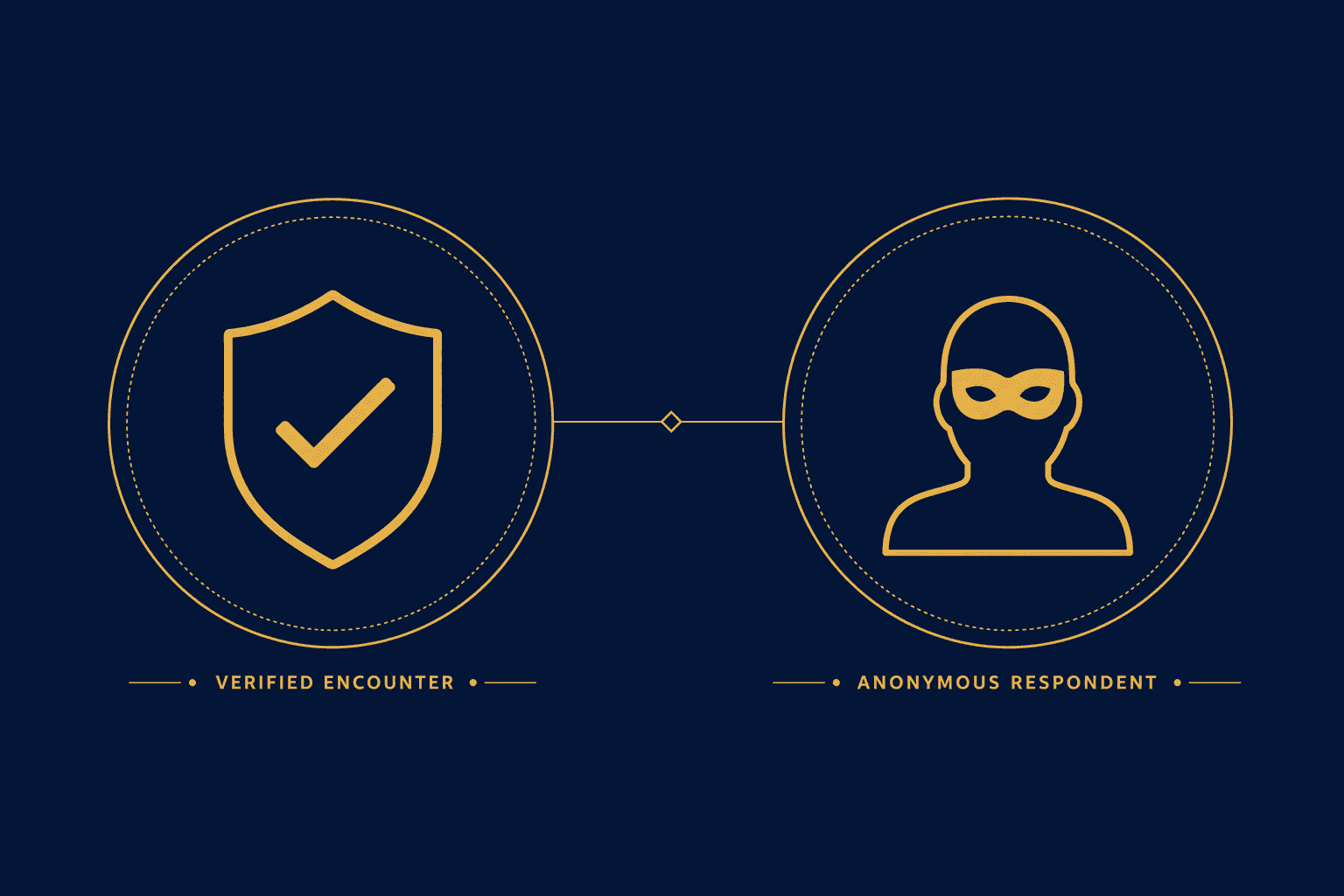
Verification attaches to the encounter. Anonymity attaches to the person. The two can coexist without conflict.
That distinction is the whole game. Once you stop treating "anonymous" and "unverifiable" as synonyms, the paradox stops being a paradox.
How a single-use card actually works
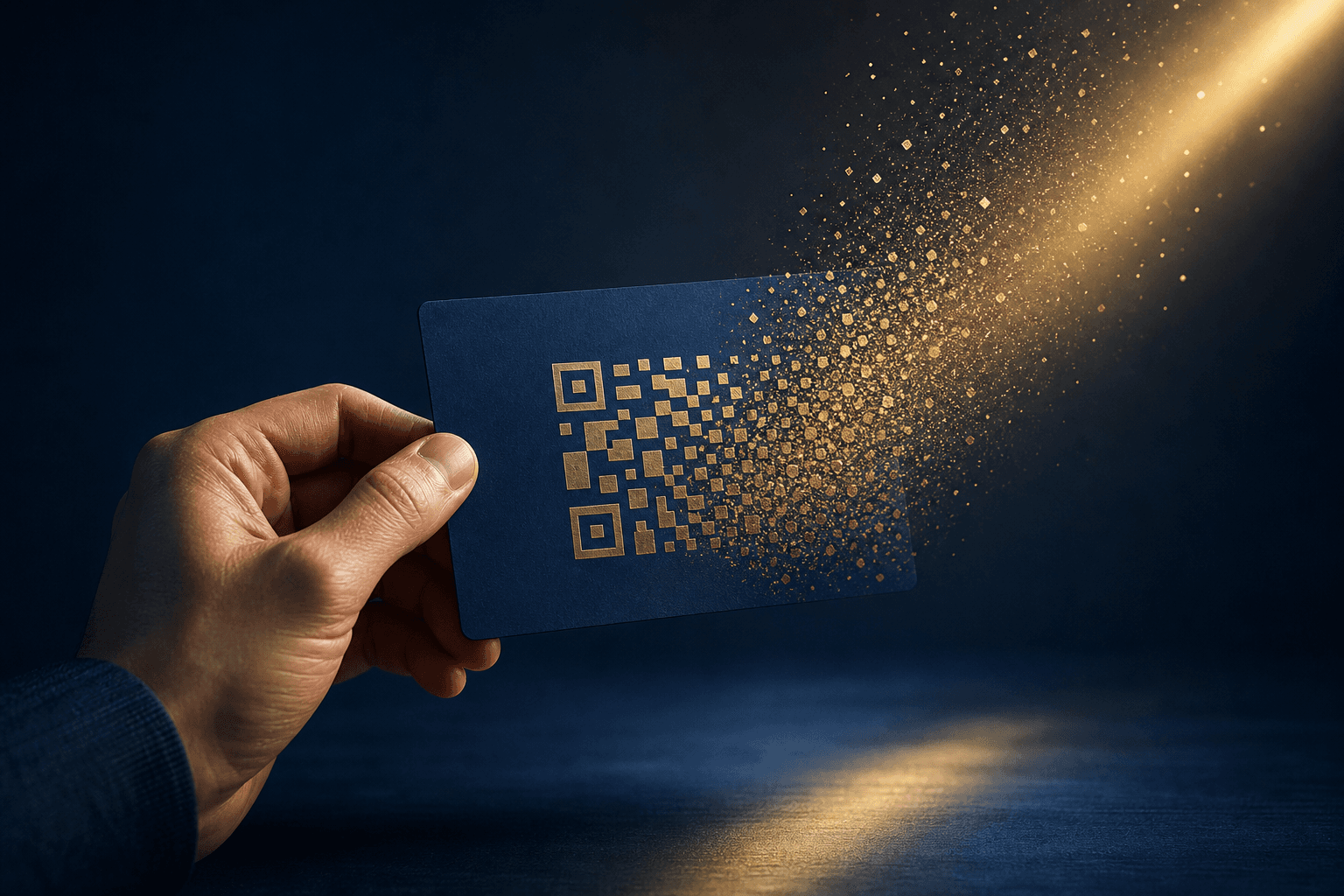
The mechanism is deliberately low-tech, because it has to survive a real shift and not a lab. At the end of a stop, a call for service, or a community contact, the officer hands over a small card carrying a unique QR code linked to that officer. The community member scans it whenever they choose, on their own phone, on their own time.
The survey that opens takes about sixty seconds. It asks about five research-backed behaviors: explaining why, listening, fairness, professionalism, and explaining what happens next. Those five come straight from procedural justice research, and they are the behaviors that most strongly predict whether people walk away seeing police as legitimate. Then the code dies. It cannot be scanned again, forwarded to a friend, or reused next week.
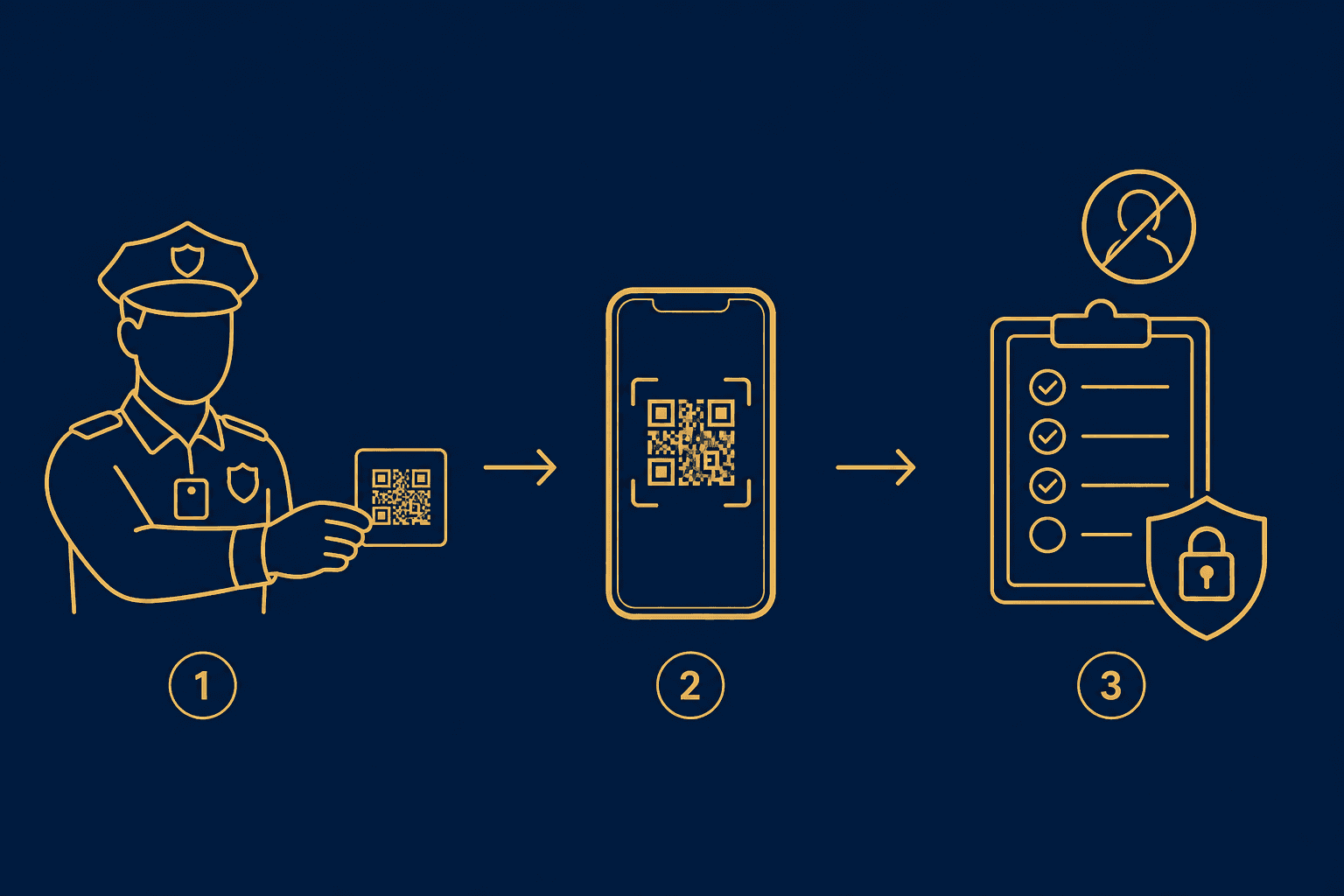
A single-use QR card ties one anonymous response to one verified encounter with one officer.
What you are left with is feedback anchored to a real event, attributed to a real officer, from a respondent who stays unknown. No login. No account. No name.
What the single-use card structurally prevents
The verification layer is not a nicety bolted on for comfort. It removes, by design, the failure modes that make chiefs rightly suspicious of anything that sounds like "rate my cop."
- No brigading. A viral post cannot send a thousand strangers to bury an officer's scores, because no card means no survey.
- No bots. There is no open form sitting on the internet to script against. Each code exists once and expires once.
- No grudges from people the officer never met. Someone furious about policing in the abstract, but never part of this encounter, has no way in.
- No stuffing the box in the friendly direction either. An officer cannot pad their own numbers, since each card supports exactly one response from the person who received it.
Compare that with the open rating portals people usually picture: a public page where anyone can post about any officer at any time. Those fail predictably, and the reason is worth naming. They pair anonymity with zero verification, the exact combination that rewards the most motivated poster and invites coordinated pile-ons. The result is data no chief can defend in front of a union rep, a council, or a court. Officers dismiss it, correctly, and the instrument dies. Verification is what makes anonymity safe to use. Anonymity is what keeps verification honest.
Why anonymity produces more honest feedback
So why not verify identity too, just to be thorough? Because attaching a name changes what people say, in both directions.
A community member asked to sign feedback about an armed agent of the government will hesitate, especially after a tense encounter and especially where trust is already thin. Some soften their answers. Many simply say nothing. Remove the fear that criticism can be traced back to you, and people respond. Across agencies using Guardian Score, roughly 86 percent of started surveys get finished, and about two-thirds of respondents take the time to write a comment.
The average rating across those agencies is 4.7 out of 5, and that number carries a lesson of its own. When honesty gets easier, the honest signal is mostly positive. People have been waiting for a legitimate way to say an officer treated them decently.
Privacy here is engineered, not promised in a policy nobody reads. The survey collects no name, no phone number, no email, no account. There is nothing to subpoena and nothing to leak, which also tidies up the department's records posture, since you cannot disclose personal information you never gathered. The community member is protected from the department. Just as importantly, the officer is protected from feedback curdling into a personal, traceable dispute.
Two honest limits belong here. Anonymity means you cannot follow up with an individual respondent. And a per-encounter system only hears from people who actually had contact, so for population-wide sentiment you still want a periodic benchmark survey, which we weigh in our guide to measuring community trust. A single rating also means very little on its own. The value lives in the trend across dozens of encounters.
What being rated feels like from inside the uniform
None of the design matters if officers experience the system as surveillance, so it is worth saying plainly what verified-anonymous feedback looks like from their side of it.
The skepticism is normal and rational. Officer Molly Kimball of the Warrenton (VA) Police Department put it this way: "At first we were skeptical. We thought it might bring more negative feedback. After using it, a lot of us really like it. It's been a positive experience for me and my colleagues." That arc, from wary to won over, is the common one, and it turns on two discoveries.
The first is that the feedback is overwhelmingly positive. Most police work is done well, and for once there is a record of it. A written note from a stranger saying an officer was patient during the worst hour of their week lands differently than any internal commendation ever could, and surfacing those notes through officer dashboards gives good work the paper trail it has always lacked. The second discovery is that the data is fair by construction. Because every rating comes from a verified encounter, an officer never has to wonder whether a low score came from someone they never met. Supervisors coach on trends rather than single ratings, so one rough night does not define anyone, and a sustained dip becomes an early, humane conversation instead of a complaint or a viral clip.
Guardian Score designs, prints, and ships the cards, and the sixty-second survey runs with no IT integration to schedule. That is the quiet part worth repeating: the hard problem was never the technology. It was proving to a skeptical room that anonymous and accountable can describe the very same piece of feedback.
Frequently asked questions
How can police feedback be anonymous and verified at the same time?
Verification applies to the encounter, not the person. A single-use QR code handed out by the officer at the scene is the only way to open the survey, so every response is tied to a real interaction while the respondent never provides a name or any identifying information.
Does anonymous police feedback lead to more negative reviews?
Usually the opposite. Because every respondent actually interacted with the officer, feedback reflects real experiences rather than general anger. Across agencies using Guardian Score, the average rating is 4.7 out of 5 and roughly two-thirds of surveys include written comments.
Can someone submit feedback about an officer they never met?
No. Without a card from a real encounter there is no survey access, and each code works exactly once. That blocks brigading, bots, and secondhand grudges by design.
What personal information does the community member provide?
None. The survey collects no name, contact information, or account. Responses are analyzed in aggregate and as officer-level trends, so there is no personally identifiable information to store or disclose.