Procedural Justice
An ethical framework for law enforcement that prioritizes fair treatment, clear explanations, and active listening in every interaction, focusing on the quality of engagement over outcomes.
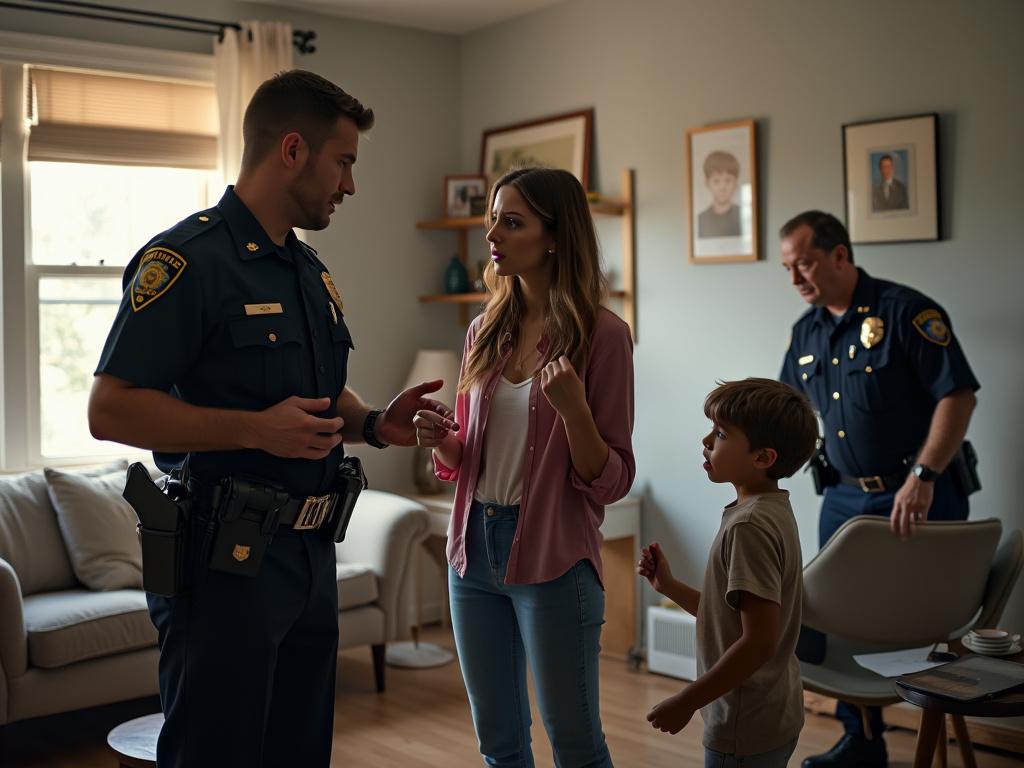
Build Community Trust
Build stronger police-community relations through respectful interactions and improved public perception.
Reduce Forceful Encounters
Decrease use of force incidents and arrests through improved communication and conflict resolution.
Lower Crime Rates
Studies show significant crime reduction in areas where officers practice procedural justice techniques.
The Key Principles of Procedural Justice
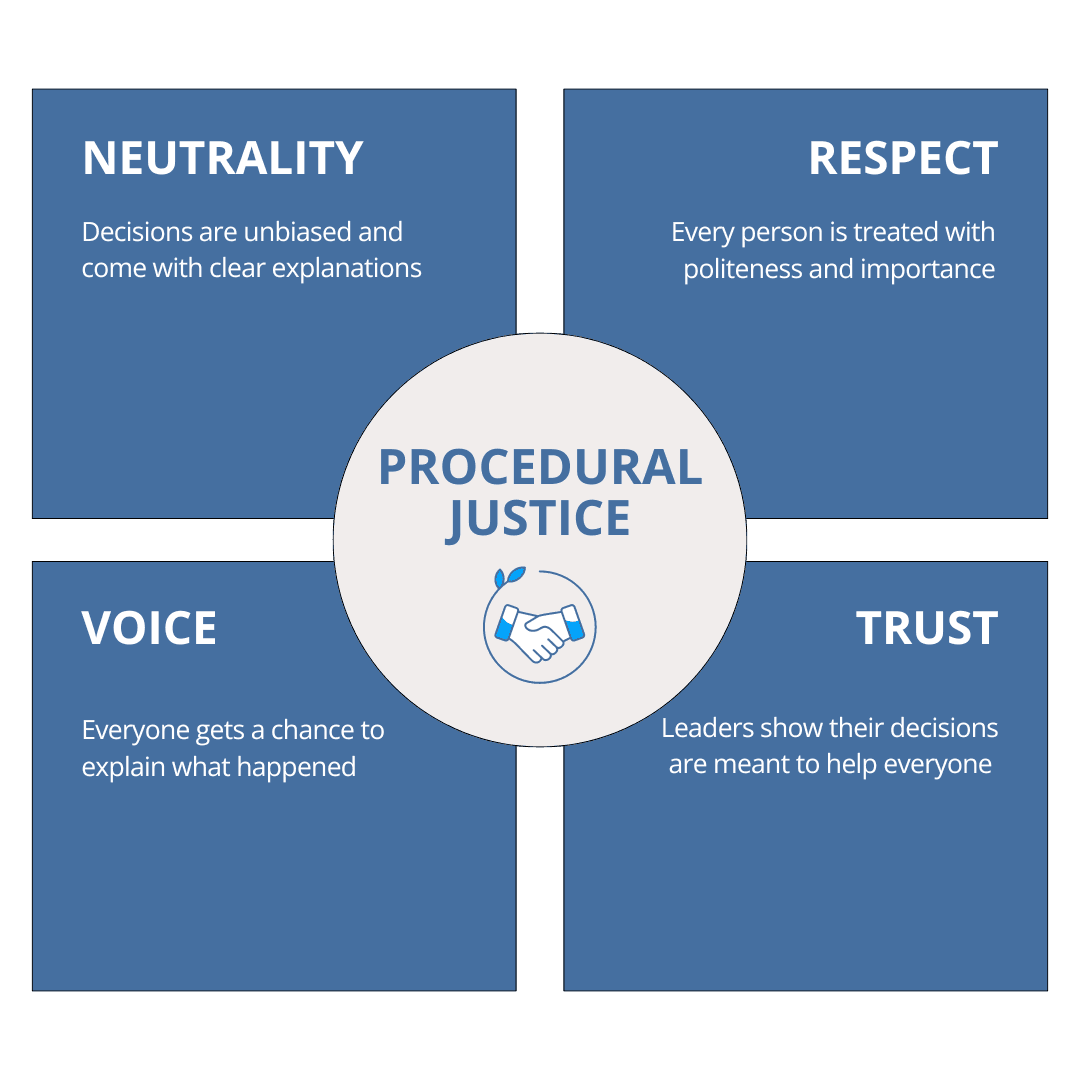
Procedural justice focuses on fair and transparent decision-making. When people feel treated fairly by officers, they're more likely to cooperate, follow the law, and trust the department that serves them.
Neutrality means treating everyone equally without bias or favoritism.
- Ensures fair treatment for all individuals
- Builds trust in the justice system
- Reduces perceptions of discrimination
Measuring What Matters: Procedural Justice in Policing
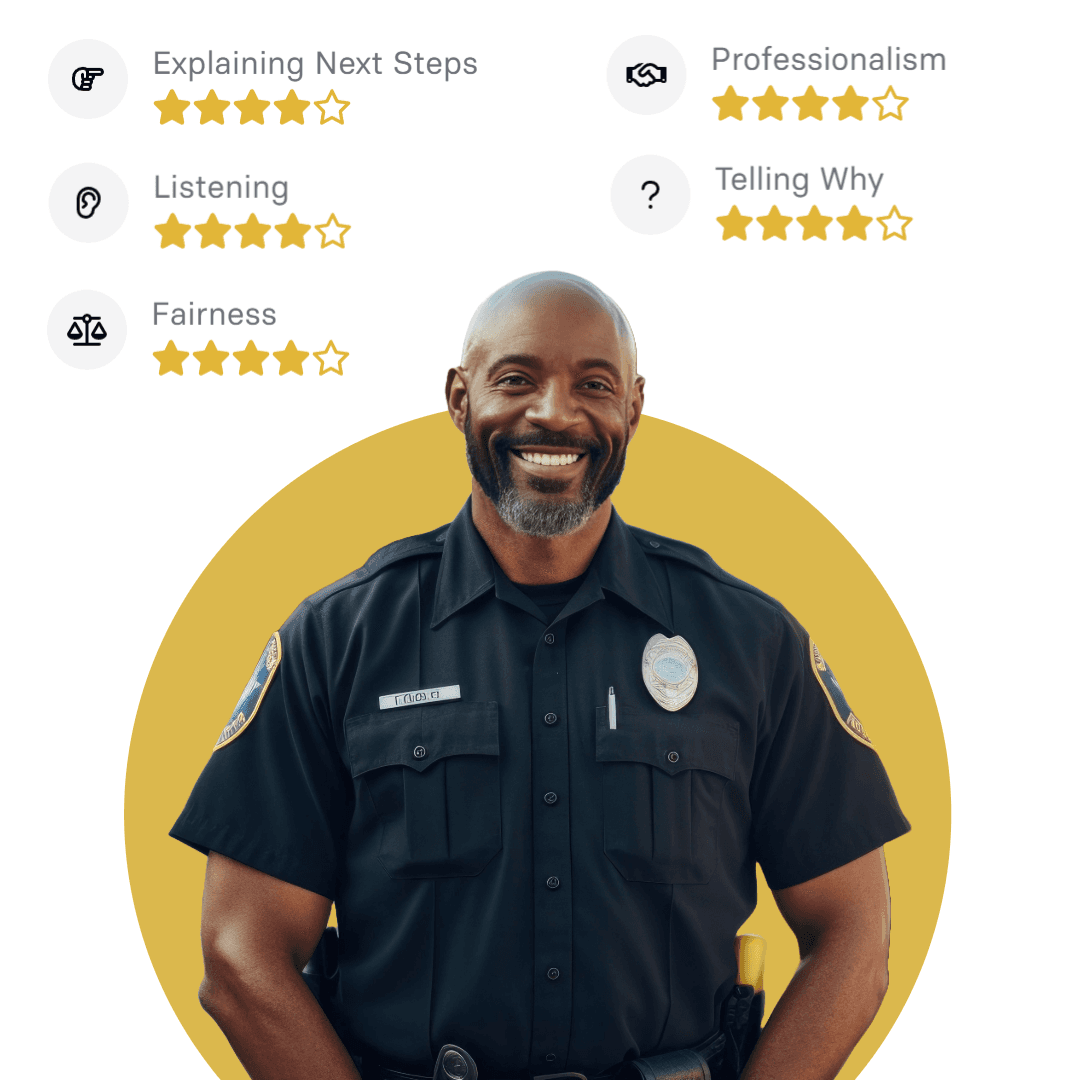
Guardian Score evaluates officers on five key aspects of procedural justice, offering insights into their community interactions:
Explanation of "Why"
Measures how well officers explain the reasons behind their actions and decisions, promoting transparency and understanding.
Listening Skills
Assesses officers' ability to actively listen and make community members feel heard and respected during interactions.
Fairness
Evaluates officers' impartiality and consistency in applying the law, regardless of the situation or individual involved.
Professionalism
Gauges officers' conduct, communication, and appearance to maintain high standards and represent the department positively.
Explanation of Next Steps
Measures how effectively officers communicate what will happen next and provide relevant resources to community members.
The Reality of Police-Community Interactions
Data from the Bureau of Justice Statistics reveals the nature and frequency of police-community interactions, highlighting the importance of positive encounters.
Annual Police-Public Interactions
61.5 million
interactions occur between police and the public in the U.S.
Frequency of Interactions
1 in 5
people reported coming into contact with police in the past 12 months
Peaceful Interactions
98%
of people who had contact with police did not experience threat or use of force
Make procedural justice measurable
Join departments using verified feedback to recognize excellence and strengthen community trust.
Frequently Asked Questions
Have questions? We've got answers.