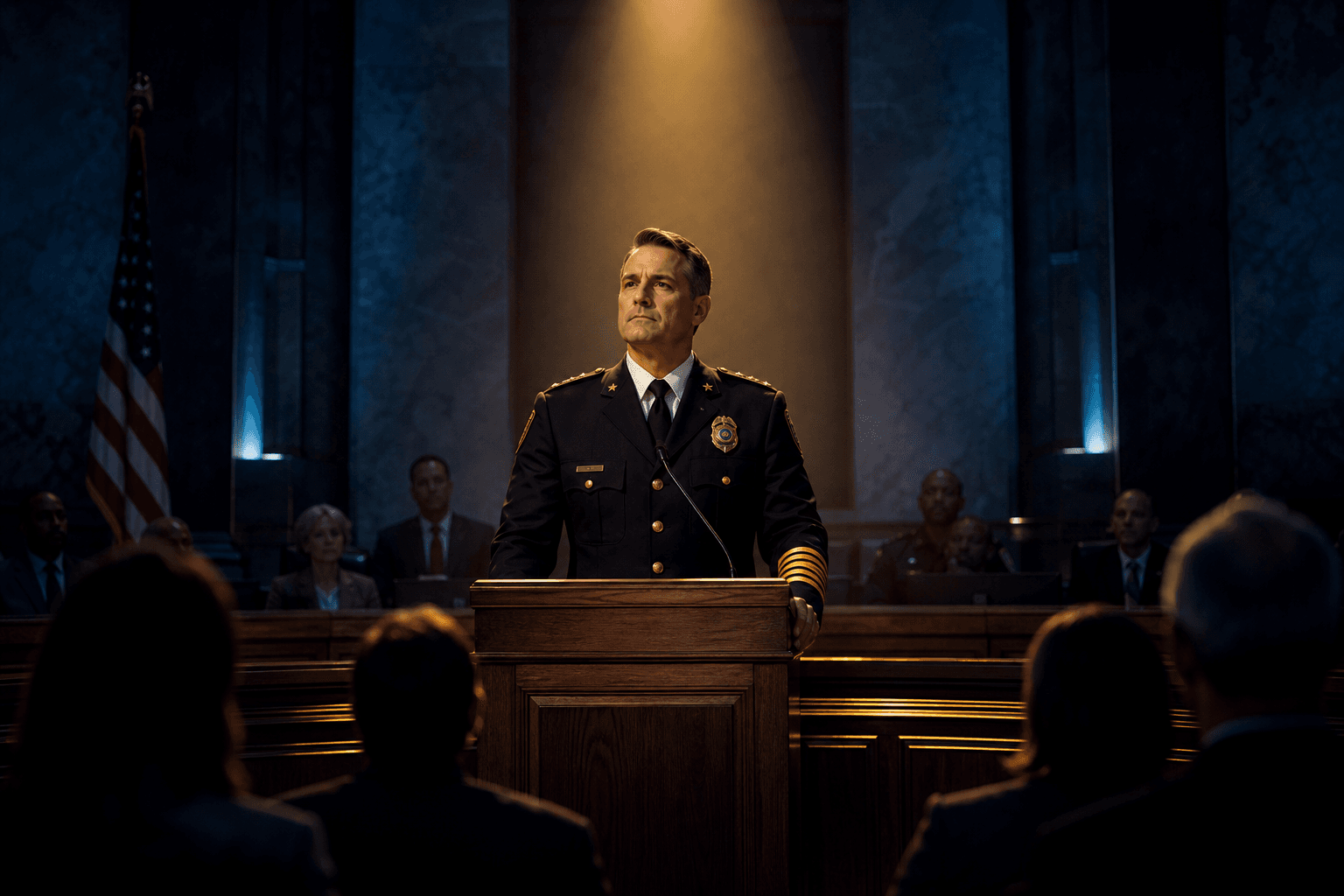

I spent years as a police officer in Alexandria, Virginia, and I can tell you exactly how many arrests I made, how many citations I wrote, and how quickly I reached my calls. Every one of those numbers lived in a system somewhere. What I cannot tell you, because nobody ever asked, is how the thousands of people I actually talked to felt when I walked away.
That is not a personal failing. It is how the entire profession is built.
The Bureau of Justice Statistics estimates that residents of the United States have more than 60 million contacts with police every year. Traffic stops. Calls for service. Welfare checks. A question answered at a street festival. A few calm words that keep an argument from turning into a fight. Now ask the question that should keep chiefs up at night: how many of those 60 million encounters produce a single piece of information about how they went?
Almost none. That gap, between what policing does all day and what policing actually measures, is the largest blind spot in American law enforcement. It is also the reason so many agencies are flying blind on the one outcome they exist to earn.
We count everything except the thing that matters
Walk into any command staff meeting and you will see the numbers policing loves: arrests, citations, response times, calls cleared, reports filed. They roll up into dashboards, CompStat slides, and annual reports to the council, and they answer one question with real precision. How much enforcement activity did we produce this month?
They do not answer the question the community, the council, and the chief care about most. Are people walking away from our officers trusting us more, or less?
Look closely at the numbers we do collect and the problem gets sharper. Arrests and citations measure outputs, not the quality of the encounter that produced them. Response times measure how fast the car arrived, not what happened after the officer stepped out. Complaints measure a sliver of the interactions that went badly and say nothing about the vast majority that went fine or went well. If you want the longer version of this argument, I made it in police performance metrics beyond arrests and citations.
So the 60 million everyday encounters, the raw material of police legitimacy, disappear without a trace. No rating. No comment. No record of whether the officer explained the stop, listened to the answer, or treated a nervous driver like a person. Trust gets built or broken one interaction at a time, and the profession keeps none of the receipts.

Agencies measure the visible tip, the stops, arrests, and response times, while the far larger mass of everyday interactions sinks below the waterline unmeasured.
The blind spot stopped being excusable in 2015
This is not a new observation. In 2015 the President's Task Force on 21st Century Policing said it in plain language. Recommendation 1.7 asks agencies to "track the level of trust in police by their communities just as they measure changes in crime" (full report). That was more than a decade ago. Most agencies still do not do it.
The standard explanation is that trust is too soft to measure. It is a feeling, a mood, a headline that comes and goes. I understand the instinct, because I used to share it. But it does not survive contact with history. We once said the same thing about crime. Crime was chaos, luck, a thousand forces outside any precinct's control, right up until CompStat forced the profession to treat it as a measurable, manageable outcome with an owner and a trend line.
So here is the sentence I want every chief to sit with. If you can measure crime, you can measure trust. The tools are different. The discipline is the same.
But we already survey the community
Some chiefs tell me they already measure trust. They run an annual community survey, maybe a satisfaction questionnaire that goes out with the water bill or lives on the department website. I respect the effort, and it beats doing nothing. But a once-a-year survey answers a different question than the one that matters operationally.
An annual survey asks the general public how it feels about "the police" in the abstract. Most respondents have not had a recent encounter with your officers, so what you are really capturing is the local news cycle and the national headlines, not the conduct of your people. The results land months late, cannot be tied to a specific officer or shift, and give a sergeant nothing to coach on. It is a rear-view mirror, not a dashboard.
Per-interaction feedback is the opposite. It asks the person who just met your officer, while the encounter is still fresh, about the behaviors that were actually within the officer's control. That is the whole difference between a poll and a performance metric.
Trust is measurable, one interaction at a time
The science of what makes people trust police is not a mystery. Decades of procedural justice research show that people judge an encounter less by the outcome, ticket or warning, than by the fairness of the process. Did the officer explain why this was happening? Did they actually listen? Were they fair? Were they professional? Did the person leave understanding what happens next?
Those are not abstractions. They are concrete, observable behaviors, and a community member who just lived through a traffic stop can rate them in under a minute. The hard part has never been the rating. It has been keeping the data clean. Open a public survey to the internet and you get bots, brigading, and grudges from people the officer never met.
The fix is verification. Tie every response to a real, specific encounter, for example a single-use QR code an officer hands over at the scene, and the noise falls away. That is the whole idea behind interaction cards: each rating maps to an actual interaction, and the person giving it stays anonymous. Do that across thousands of encounters and trust stops being an anecdote you argue about at budget time. It becomes a baseline, a trend, and a management tool, which is exactly what measuring community trust actually requires.
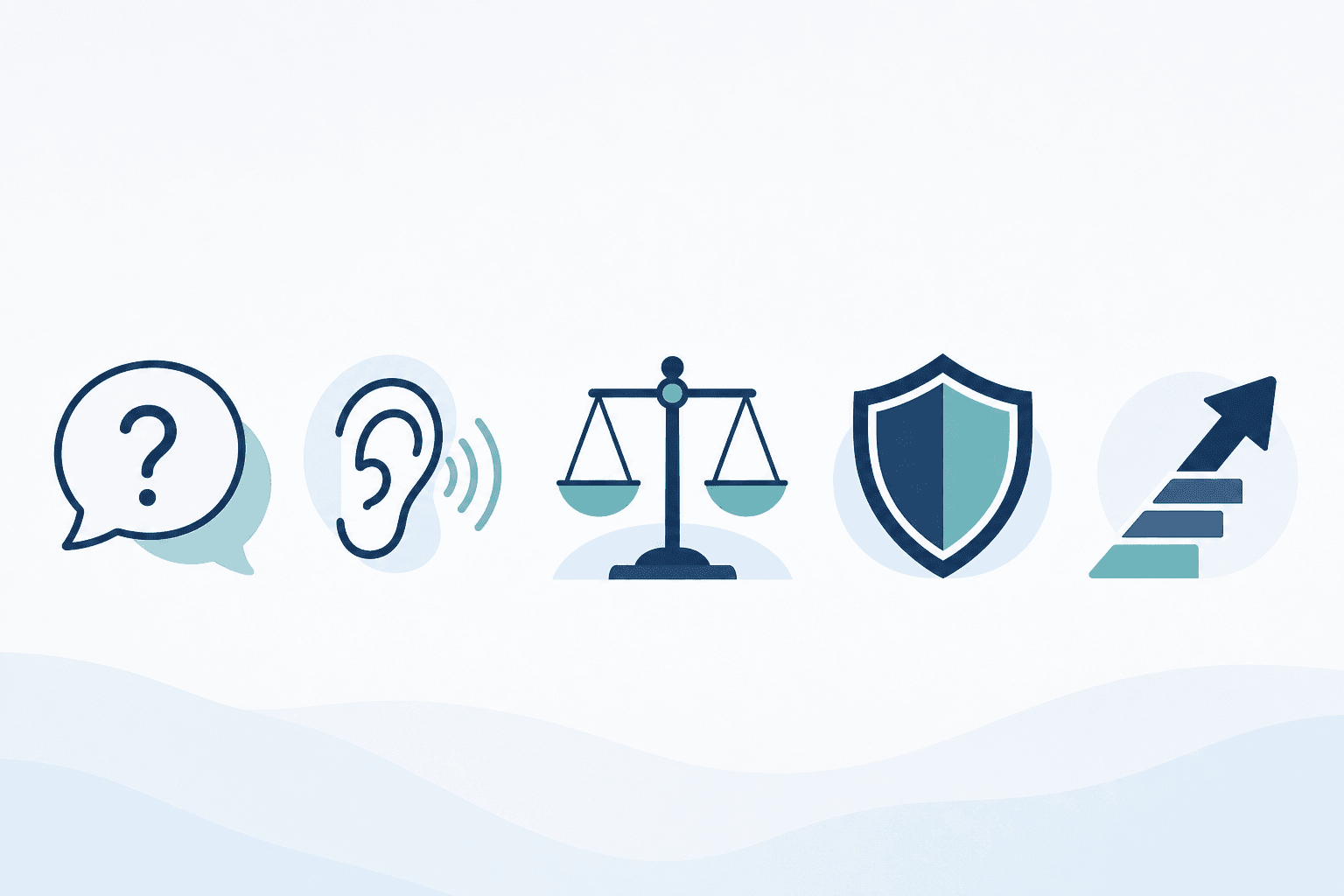
Trust breaks down into five behaviors a person can rate in under a minute after a real encounter.
Trust is coachable
Measurement matters because the behaviors that earn trust can be taught. In Chicago, researchers studied a single day of procedural justice training and found it was followed by a 6.4 percent decline in use of force and a 10 percent decline in complaints over the next two years (Wood, Tyler, and Papachristos, PNAS 2020). One day of training, and measurable change in the field.
Now pair that training with continuous, per-interaction feedback, and supervision changes character. A sergeant no longer coaches from gut feel or from the occasional complaint that surfaces months after the fact. She coaches from patterns. This officer's listening scores slipped this quarter, so let us talk about what changed. That officer's explanations rate consistently high, so put him with the new recruits. Trust data turns supervision from incident response into steady player development.
It also protects officers as much as it develops them. A high, verified trust score is a kind of shield. When a complaint does come in, a supervisor can weigh it against a long record of how that officer actually treats people, instead of reacting to a single account in a vacuum. Officers feel that difference. Being measured fairly, on the full body of their work rather than only its worst day, is something most of them have never had.
Trust is recognizable
Here is the part that surprises skeptical command staff the most. When agencies actually ask, the community mostly says thank you.
Across agencies using Guardian Score, the average rating is 4.7 out of 5, more than 1.25 million community members have been served, and roughly two-thirds of surveys arrive with written comments, most of them naming specific things an officer did well. Think about what that does for the officer. Right now their finest moments, the de-escalation nobody recorded, the patience on a bad call at 3 a.m., leave no paperwork and earn no praise. Verified community feedback finally gives those moments a record, and gives supervisors something concrete to recognize officers with.
Officer Molly Kimball of the Warrenton Police Department described the shift better than any pitch deck could. "At first we were skeptical. We thought it might bring more negative feedback. After using it, a lot of us really like it. It's been a positive experience for me and my colleagues."
The category policing forgot to build
Policing has technology for nearly everything. Records management, computer-aided dispatch, digital evidence, body cameras, crime analytics down to the city block. What it does not have is a system of record for trust, the single outcome the entire enterprise exists to produce.
The 60 million interactions are already happening today, whether or not anyone captures them. The only real question is whether they keep evaporating or start telling agencies something useful. The departments that decide to measure trust first will define what good looks like for everyone else. The rest will keep answering the hardest questions in public life with anecdotes, hoping the next headline is a kind one.
What you can do Monday
You do not need a task force or a fresh budget cycle to start. Pick one shift, one unit, or one supervisor and run a short exercise. List every measure your agency currently reports, then circle the ones that capture how the community experienced your officers. For most agencies the circle stays empty, and that empty circle is the whole argument.
Bring the list to your next command staff meeting and ask one question. What would it take to put a trust metric next to the crime numbers? Even a small pilot, a handful of officers and a stack of verified surveys, will teach you more about your community relationships than another year of complaint reports ever will.
Guardian Score gives agencies that per-interaction trust metric: verified, anonymous community feedback scored on procedural justice, live in weeks rather than months. If you are ready to measure what your officers actually do all day, book a demo.
Frequently asked questions
Are 60 million police interactions really unmeasured?
The Bureau of Justice Statistics estimates that residents of the United States have more than 60 million contacts with police each year. Agencies count activity around those contacts, such as stops, arrests, and response times, but almost none collect systematic feedback on how community members actually experienced them.
Is community trust in police actually measurable?
Yes. Procedural justice research breaks trust into ratable behaviors: explaining why, listening, fairness, professionalism, and explaining what happens next. When feedback is verified against real interactions and collected anonymously, those ratings become a reliable trust metric at the officer, unit, and department level.
Will asking for feedback just invite complaints?
Field results suggest the opposite. Across agencies using Guardian Score, the average rating is 4.7 out of 5, and roughly two-thirds of surveys include written comments, most of them naming what officers did well. Verification keeps every response tied to a real encounter rather than open-forum venting.