

The federal monitors are packing up. In 2025 the Department of Justice moved to dismiss its consent decrees in Minneapolis and Louisville and closed several pattern-or-practice investigations that had taken years to build. To some observers that was overdue relief from costly federal micromanagement. To others it was a retreat from accountability that communities had fought hard to win.
I am not going to settle that argument, and if you run a police department, you cannot afford to wait for anyone else to settle it either. Underneath the politics sits a fact that does not care which side you land on: the era of externally mandated measurement is winding down. The monitors are leaving. And the question of whether an agency measures itself, improves itself, and can prove all of that to a skeptical public is landing back where it probably always belonged, on the desk of the chief.
That shift is either a vacuum or an opening. The strongest leaders I talk to are treating it as the second.
What a consent decree really was
Strip away the courtroom drama and a consent decree was, at its heart, a measurement regime. Federal oversight forced an agency to define standards, collect data against them, and report the results in public. Stops, uses of force, complaints, community sentiment, all of it made legible under the eye of an independent monitor. The process was expensive, slow, and often adversarial, and reasonable people still disagree about what it delivered. But it did one thing that nobody disputes: it made an agency's performance visible, to itself and to the people it served.
When a decree lifts, that mandate walks out the door with the monitor. What does not walk out is any of the pressure the mandate existed to answer. The community still wants to know how its police are performing. The council still asks hard questions at budget time. The reporter still files the records request. And trust, once it is lost, is still ruinously expensive to rebuild.
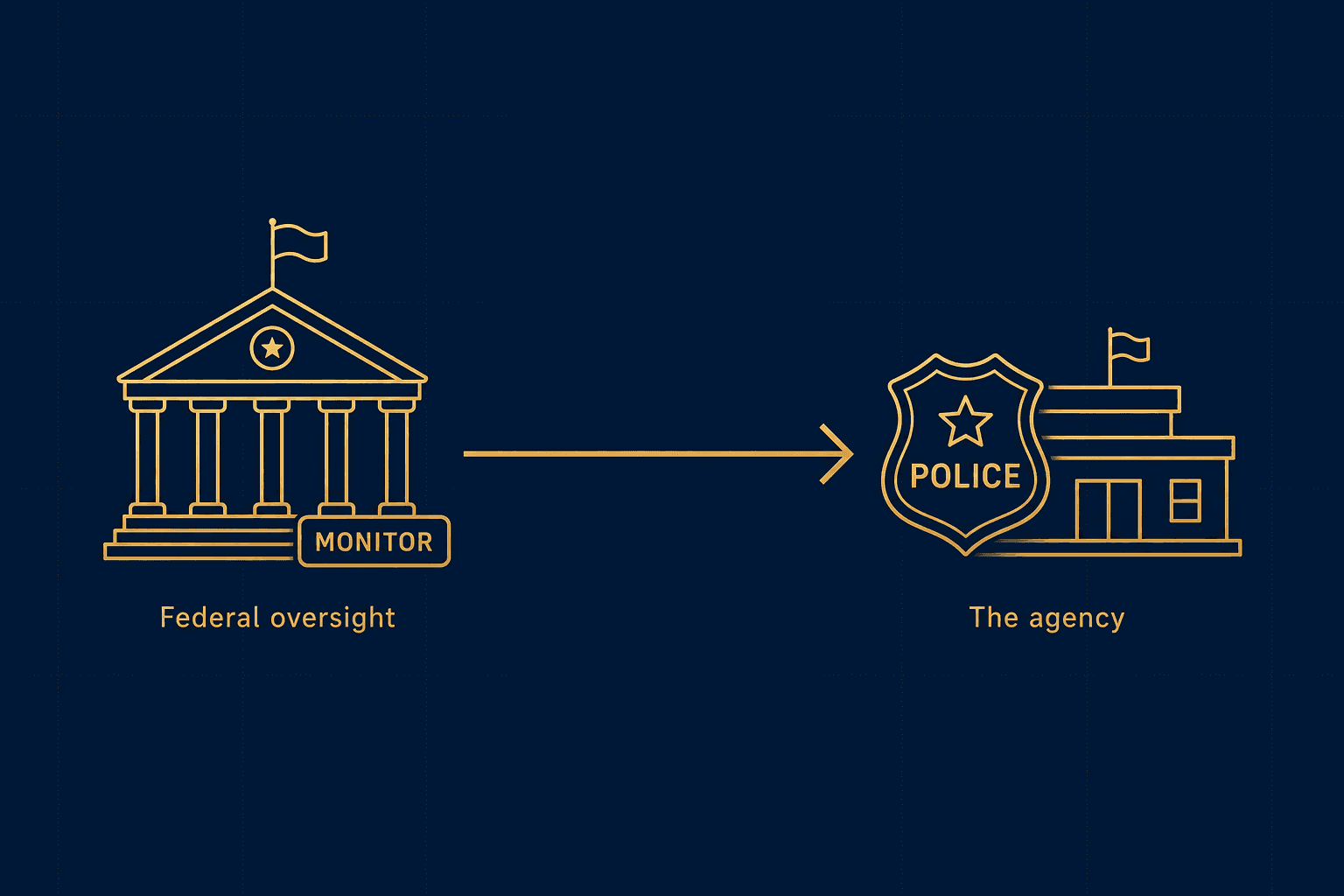
When the monitor leaves, the mandate leaves with it. The work of measurement does not. It simply changes owners.
So the post-decree question for every chief, including the thousands who were never under a decree in the first place, comes down to a single sentence. If no one is making you measure, will you?
The professional case for measuring anyway
Here is the argument I would make to any chief, in any state, of any political persuasion.
Every serious profession measures itself. Hospitals track infection rates without a court order. Airlines investigate near-misses that no passenger ever noticed. The mark of a mature profession is not that it performs well when someone is watching. It is that it holds a standard when no one is. Policing has asked for a long time to be treated as a profession. Voluntary self-measurement is what that request looks like when you actually mean it.
The standards already exist, and they are voluntary by design. In 2015 the President's Task Force on 21st Century Policing recommended that agencies "should track the level of trust in police by their communities just as they measure changes in crime" (Recommendation 1.7). CALEA Standard 2.6.5 calls for a documented citizen-attitude survey at least every two years for accredited agencies. Neither is a federal mandate. Both are the profession drawing its own line, and I have written before about how community feedback maps cleanly onto accreditation requirements.
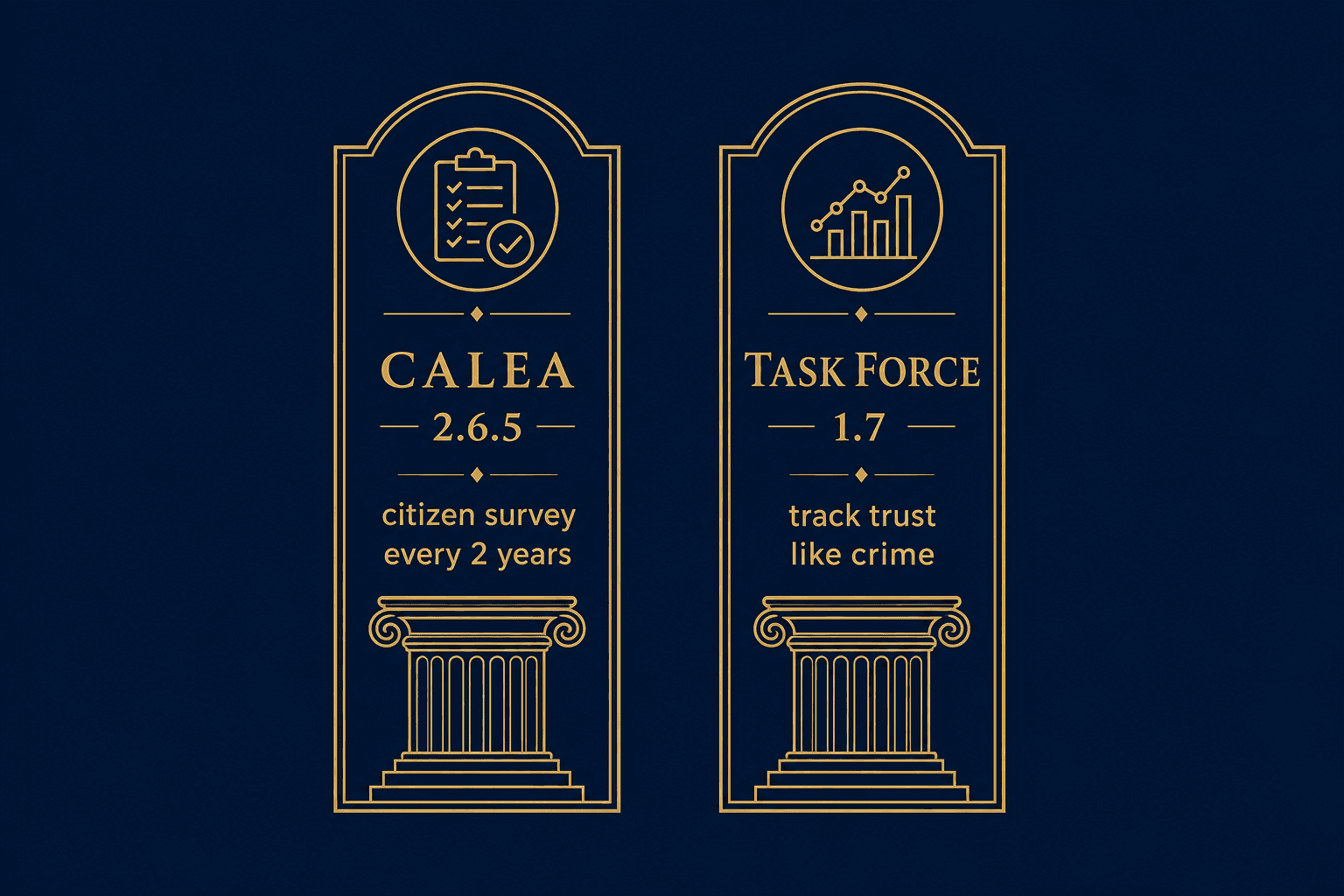
The bar was set by the profession, not by a court. These two standards have been asking agencies to measure trust for years.
Self-measurement is how you own your own narrative. An agency that knows nothing about itself does not get a neutral story when trouble arrives. It gets whatever story shows up first, which is almost always the worst video of its worst moment. An agency with years of verified community feedback stands somewhere entirely different. When controversy comes, and sooner or later it comes everywhere, the chief who can say "here is how ten thousand residents rated their actual encounters with us, here is our trend line, here is exactly where we improved" is not spinning. She is placing a bad moment inside a documented record. The chief without that record has only her word to offer, and a bad week is a poor time to be asking the public to take it.
Measured agencies improve, and unmeasured ones drift. This is management, not ideology. The behaviors that build public trust, explaining your actions, listening before you act, treating people fairly, are trainable, and the training moves real outcomes. A single day of procedural justice training in Chicago was followed by a 6.4 percent decline in use of force and a 10 percent decline in complaints over the next two years (PNAS, 2020). But you cannot coach what you never measure. Continuous interaction-level trust measurement is what turns a research finding into a supervision habit.
But what if the numbers come back bad?
This is the fear underneath every hesitation I hear, and it deserves a straight answer rather than a reassurance. So here is the straight answer. In agency after agency, the numbers come back better than the chief expected, not worse. The loudest voices in the trust debate are rarely the median resident who was treated professionally at a traffic stop and then got on with her day. Continuous measurement finally gives that quiet majority a channel, and the quiet majority is generally on your side.
But suppose one district does score poorly. That is not a scandal waiting to leak. It is a management signal that has arrived early enough for you to do something about it, which is the entire point of measuring at all. A low listening score in one squad, caught in month three, is a coaching conversation. The same problem discovered through a viral video in month thirty is a career-defining crisis. Measurement does not create the underlying reality. It only decides whether you meet that reality on your own schedule or on someone else's.
And you control the exposure. The raw feed belongs to you. What you publish, and when, is a decision you make alongside your command staff and your community, not a disclosure a monitor forces onto a court's timeline. Owning the data means owning the pace at which you share it.
Voluntary measurement is also the easier path
There is a practical irony worth saying out loud. Measuring yourself on purpose is dramatically cheaper and far less painful than being measured by someone who does not trust you. Consent decrees ran to tens of millions of dollars in monitoring costs and stretched across the better part of a decade. A voluntary trust-measurement program sits at the opposite end of that spectrum. It can be as light as an officer handing over a single-use feedback card at the close of a routine encounter, verified so every response maps to a real interaction, anonymous so residents and officers are both protected, and rolled up into dashboards the chief controls and shares on her own terms.
And unlike a metric imposed from outside, voluntary measurement captures the good news too. Across agencies using Guardian Score, community members rate their interactions 4.7 out of 5 on average, and roughly two-thirds leave a written comment, most of them praising a specific officer by name. Federal monitors were never designed to document your best people on their best days. Your own program does exactly that, automatically, which matters enormously for morale and retention at a moment when hiring is the hardest problem most chiefs have.
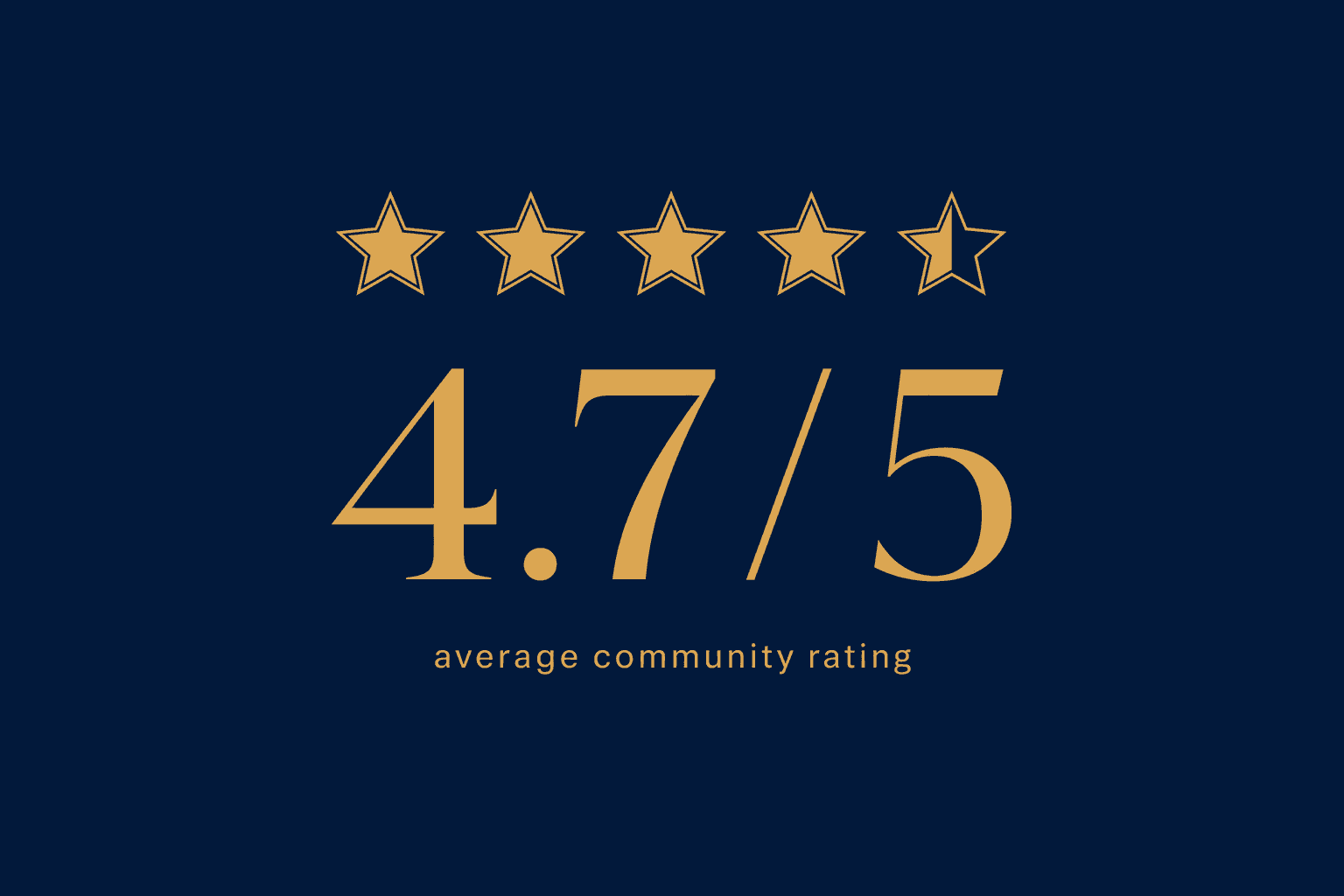
The number outside oversight rarely gets to see. Most verified feedback is not a complaint. It is recognition.
This is also why the argument travels across the political map. In places skeptical of federal oversight, voluntary self-measurement is the alternative to it: local control, professional standards, no consent decree needed because none is warranted. In places that valued oversight, it is accountability carried forward by better means. Roughly 18,000 law enforcement agencies operate in the United States, most of them with fewer than 50 officers (BJS). Federal intervention was only ever going to reach a handful of them. Self-measurement scales to all of them.
The agencies that move first
Every profession that adopted self-measurement had early movers, the ones who set the standard everyone else was later judged against. That is happening in policing right now, quietly, department by department. The agencies building verified trust baselines this year will spend the next decade pointing at their own data with confidence. The agencies that wait will end up measuring too, but on someone else's timeline, after some incident, when the data can only play defense.
There is also a recruiting dividend that almost never makes the pitch but probably should. The officers entering this profession today have only ever known policing as a contested public act. Handing them a tool that regularly tells them, in a resident's own words, that they handled a hard call with fairness and patience is not a small thing. It is one of the few honest counterweights to a job that otherwise generates feedback mostly when something goes wrong. Agencies that measure well turn out, almost as a side effect, to be better places to build a career.
Measure yourself before anyone makes you. It is better management, it is better politics, and it is better for the officers who show up and do the job well every single shift and deserve a record that proves it.
What you can do Monday
Start small and start this week. Pull your agency's most recent citizen survey, if one exists, and check two things. When was it done, and did it measure actual encounters or just general sentiment. If the honest answer is "years ago" or "sentiment only," you already have your opening.
Draft a one-page memo to your command staff proposing a voluntary trust-measurement pilot in a single unit this quarter. Anchor it to CALEA 2.6.5 and Task Force Recommendation 1.7 so the initiative reads as professional standards rather than politics, which keeps it durable across whatever comes next at the county or federal level. Name a baseline you want to establish, name the unit, and set a review date ninety days out. A pilot built on verified surveys can be producing real baseline data within a few weeks, which means your next budget conversation can open with evidence instead of assurances.
The monitors are leaving. What they were measuring is not going anywhere. The only open question is who holds the pen, and for the first time in a long time, the answer can be you.
Guardian Score helps agencies measure themselves with verified, anonymous, per-interaction community feedback that satisfies accreditation standards and builds a trust record you own. Book a demo before someone else defines your narrative for you.
Frequently asked questions
What happened to consent decrees in 2025?
In 2025 the Department of Justice moved to dismiss consent decrees in Minneapolis and Louisville and closed several pattern-or-practice investigations. Whatever your view of that decision, externally mandated measurement is receding and the responsibility for self-assessment is shifting back to agencies themselves.
Does voluntary self-measurement satisfy accreditation requirements?
It can support them directly. CALEA Standard 2.6.5 calls for a documented citizen-attitude survey at least every two years, and the President's Task Force on 21st Century Policing recommends tracking community trust the way agencies track crime. A continuous, verified feedback program meets and exceeds both.
Why would an agency invite feedback it is not required to collect?
Because the data consistently works in the agency's favor. Across agencies using Guardian Score, the average community rating is 4.7 out of 5, with roughly two-thirds of surveys including written comments, most of which recognize specific officers by name. Voluntary measurement builds an evidence base the agency owns before a crisis writes the story for it.
Is voluntary measurement expensive to run?
It is a fraction of the cost of external oversight. Consent decrees ran to tens of millions of dollars in monitoring fees. A voluntary program can be as light as officers handing a verified feedback card at the end of routine encounters, with results rolled up into dashboards the chief controls. The administrative footprint is roster maintenance, measured in minutes per week.