Sooner or later, every trust initiative faces the same room: a council meeting where someone asks whether the numbers mean anything. Anecdotes do not survive that room. Neither do annual surveys with a few hundred respondents, or star ratings with no proof an encounter ever happened. Before community feedback can function as evidence - in a budget request, an accreditation file, a union conversation - it has to pass the tests skeptics will apply whether you are ready or not.
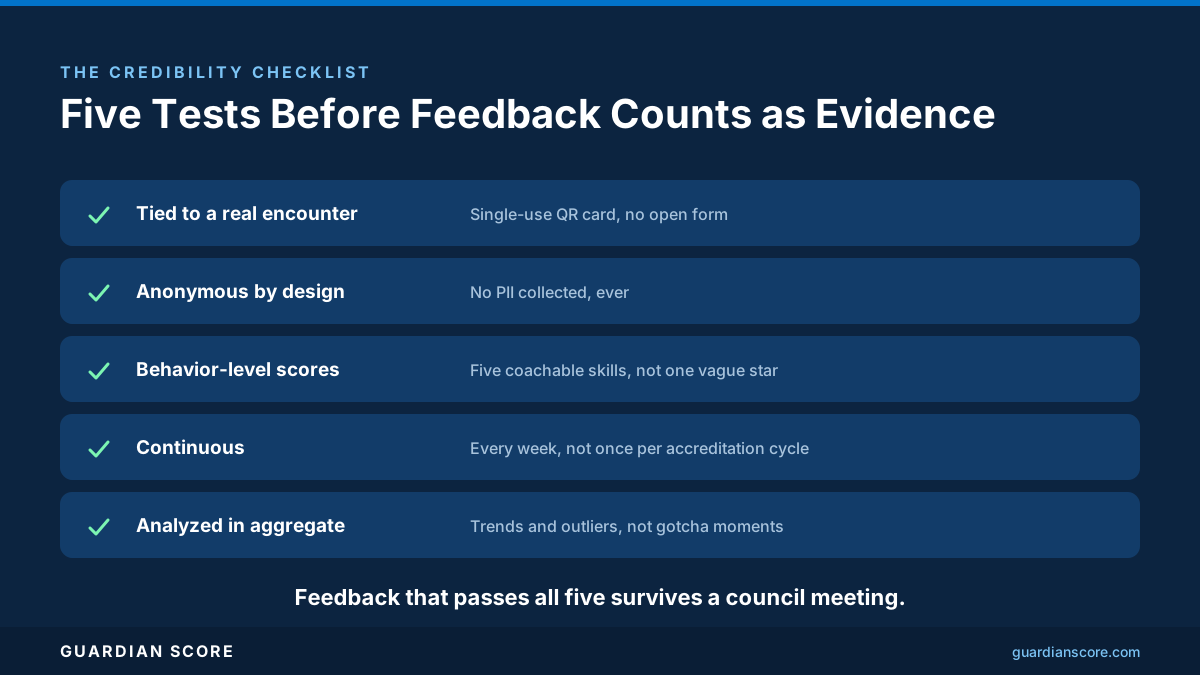
This infographic lays out the five: verified, so every response traces to a real encounter; anonymous, so responses are candid rather than performative; behavior-level, so scores describe what an officer did instead of a vague overall impression; continuous, so you see trends rather than snapshots; and aggregate, so patterns emerge from volume instead of one loud voice. Feedback that passes all five stops being "community sentiment" and starts being a performance dataset - the difference between an opinion and an exhibit.
Run your current channels against the checklist before your next data conversation with elected officials; most fail at the first test. For a full framework on turning feedback into defensible metrics, see How to Measure Community Trust in Policing.