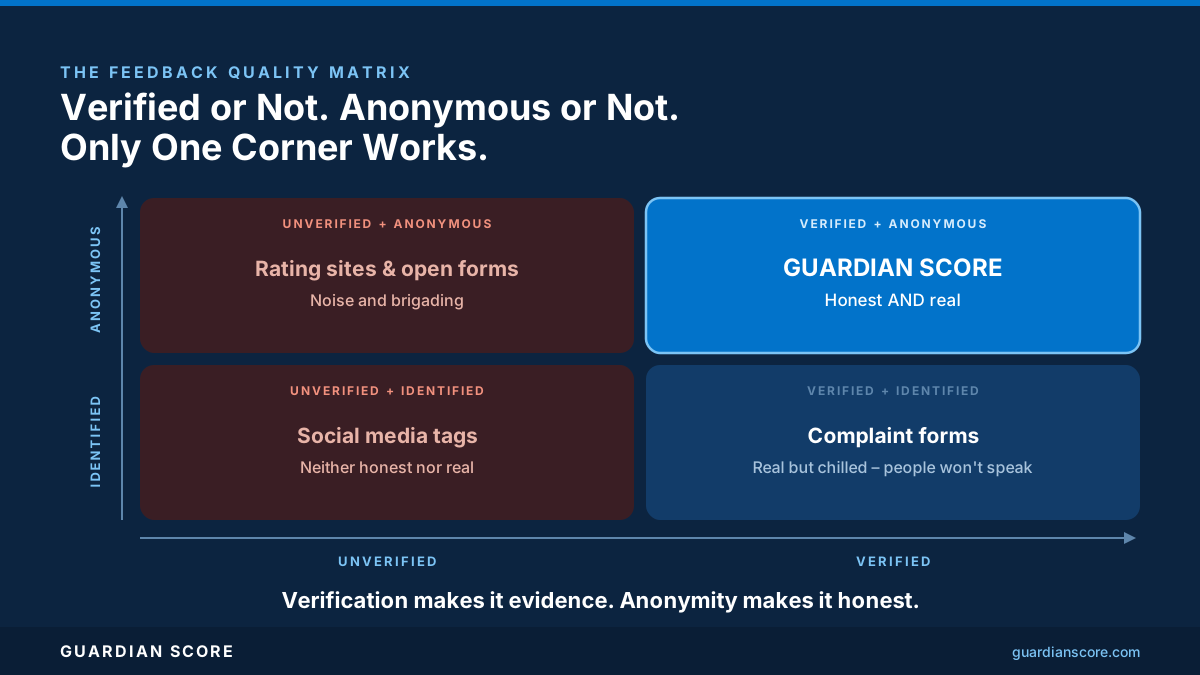
Every feedback channel a department already has sits somewhere on two axes: is the respondent verified as someone who actually had an encounter, and are they anonymous enough to be honest? Plot the options and the problem becomes obvious. Anonymous but unverified - online reviews, open web forms - is honest noise: candid, but from anyone. Verified but identified - complaint processes, follow-up calls - is real but filtered: people soften what they say when their name is attached. Neither verified nor anonymous is the worst of both. Only one corner produces feedback that is both honest and real.
This infographic maps those four quadrants so you can locate every channel your department currently relies on - and most agencies discover that everything they collect sits in the three broken corners. Verified-and-anonymous is hard to build by hand, which is why so few departments have it: it takes a mechanism that proves an encounter happened without capturing who the respondent is.
Drop the matrix into a council packet or a command-staff retreat the next time someone asks, "don't we already get feedback?" For what to do once you are collecting from the right corner, read How to Measure Community Trust in Policing.