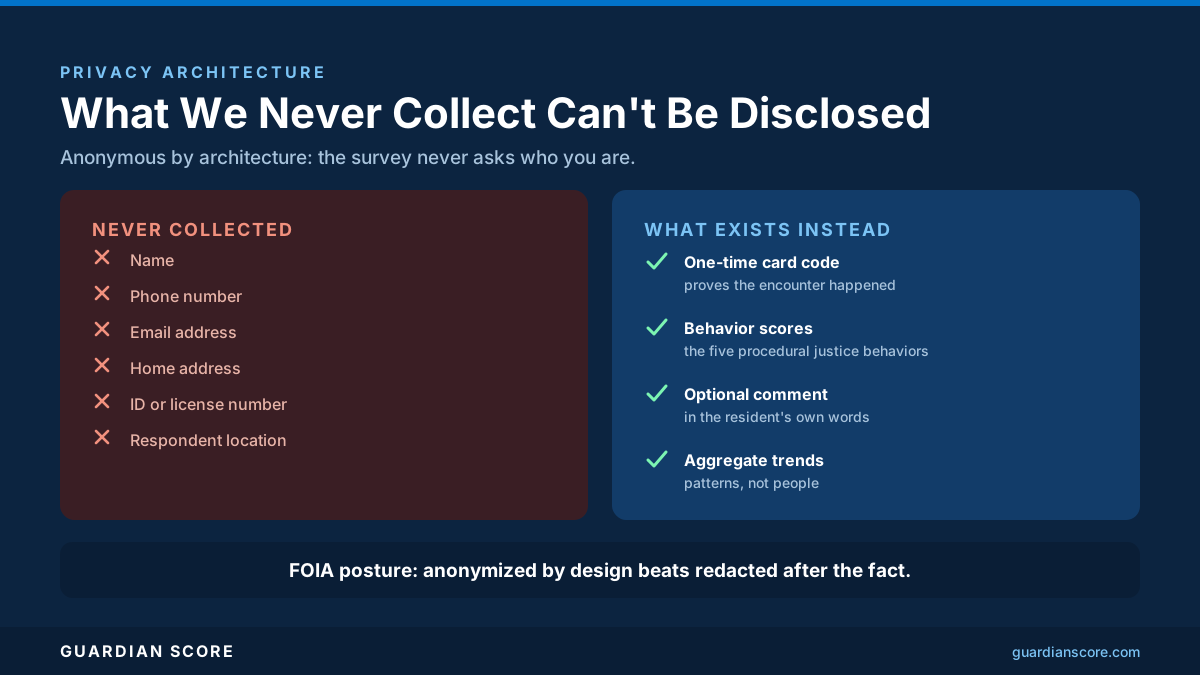
Every records custodian knows the uncomfortable truth about redaction: it happens after collection, under deadline, by a human who can miss a line. If your feedback system stores names, phone numbers, or addresses, then every FOIA request is a bet that the redaction process works perfectly, every time. The only data that can never be disclosed is data that was never collected.
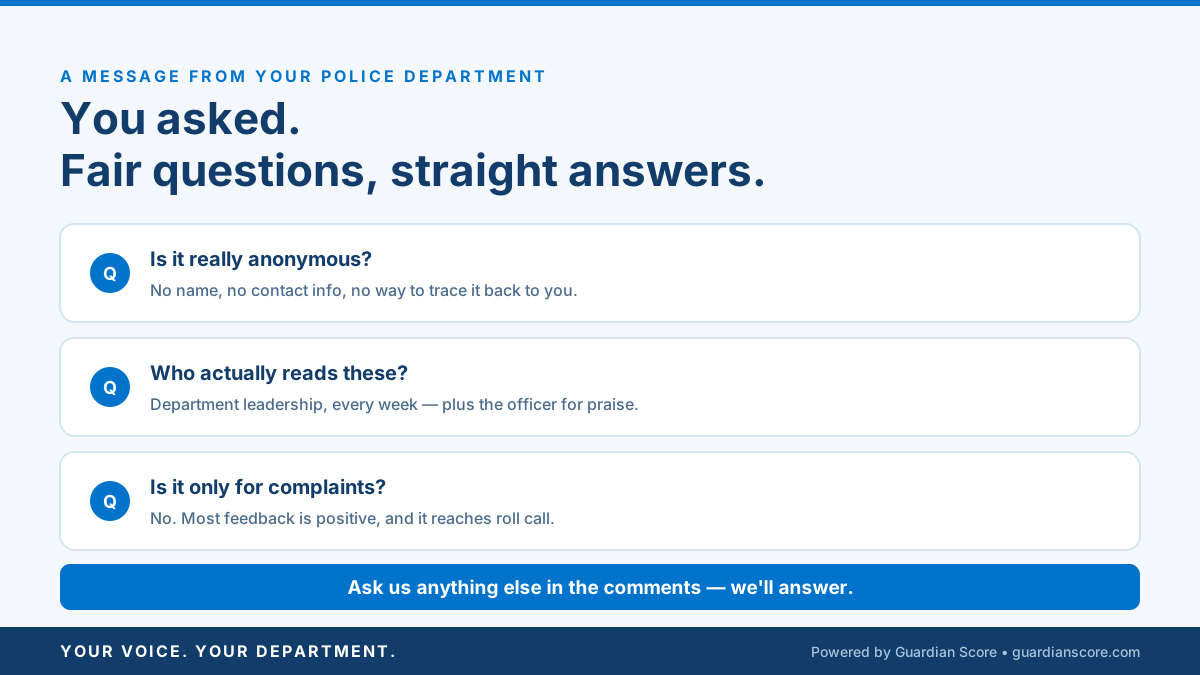
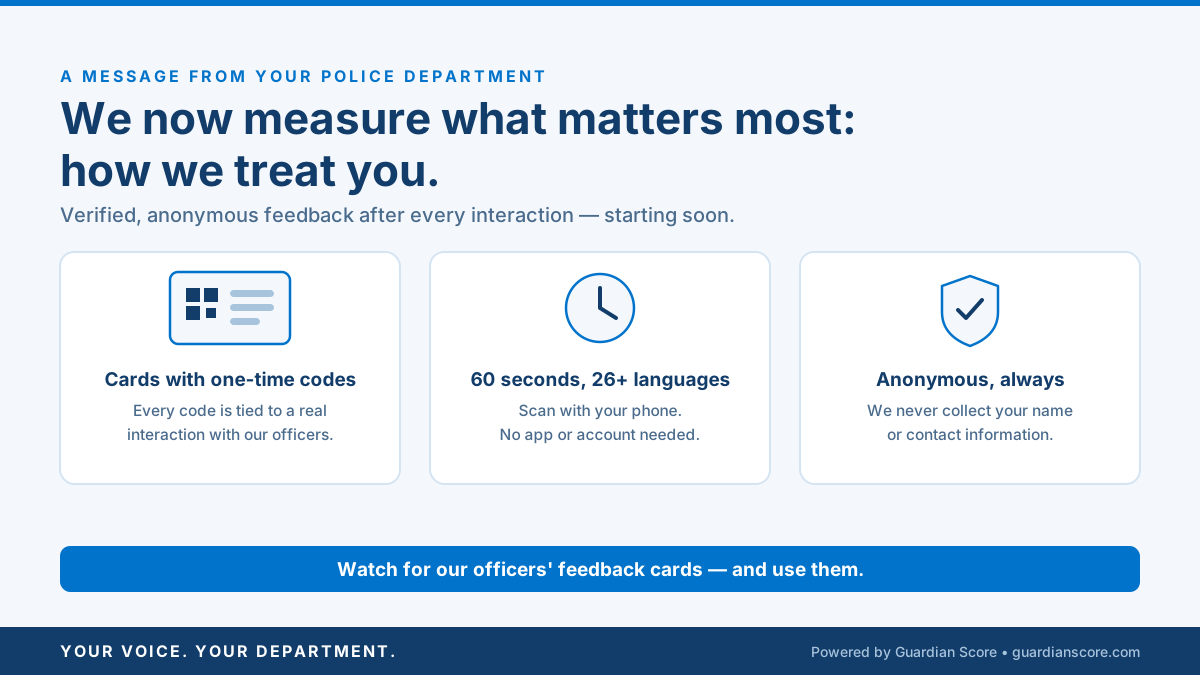
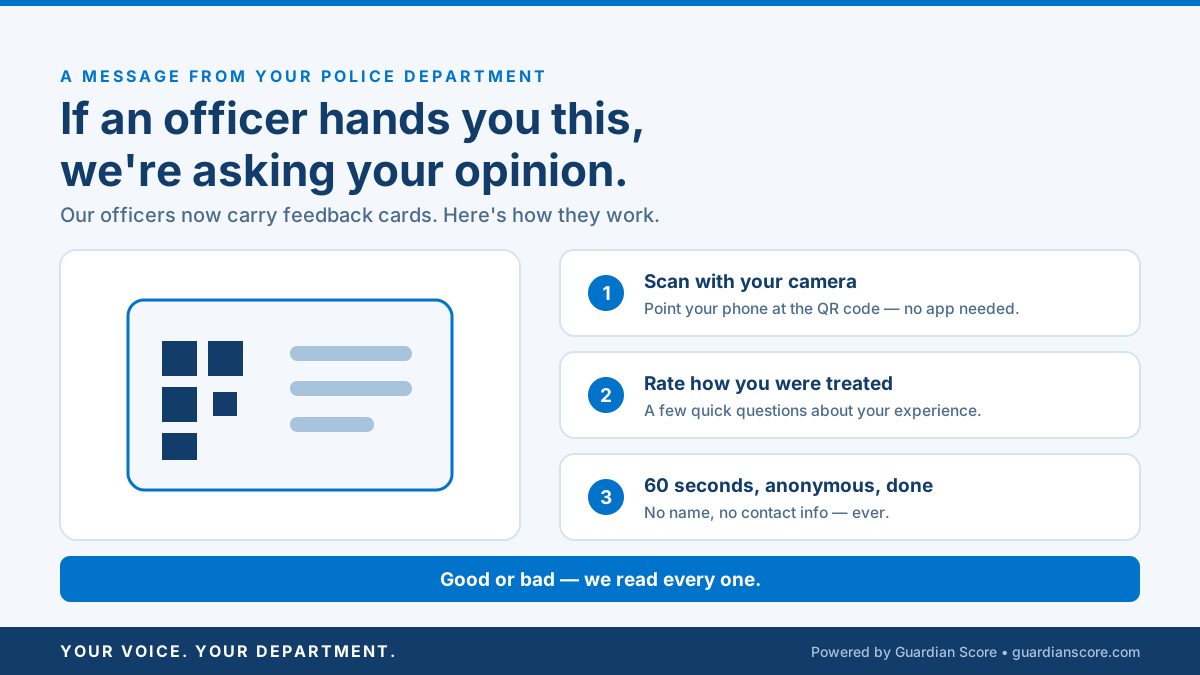
This infographic makes that argument on one page. Guardian Score is anonymized by design: the survey never asks for a name, contact detail, or address, so there is no PII to store, breach, subpoena, or accidentally release. When the records request arrives, the honest answer - "we don't have it" - is also the safest one, and it's structural rather than procedural. That distinction matters to city attorneys, to residents deciding whether honest criticism is safe, and to officers worried about who ends up holding raw complaint data. Route this page to legal counsel during procurement review, or use it at a community meeting when the "is this really anonymous?" question comes up.
For how a no-PII posture strengthens an accreditation file, see CALEA Accreditation and Community Feedback; for what the anonymized data still lets you measure, see Analytics.