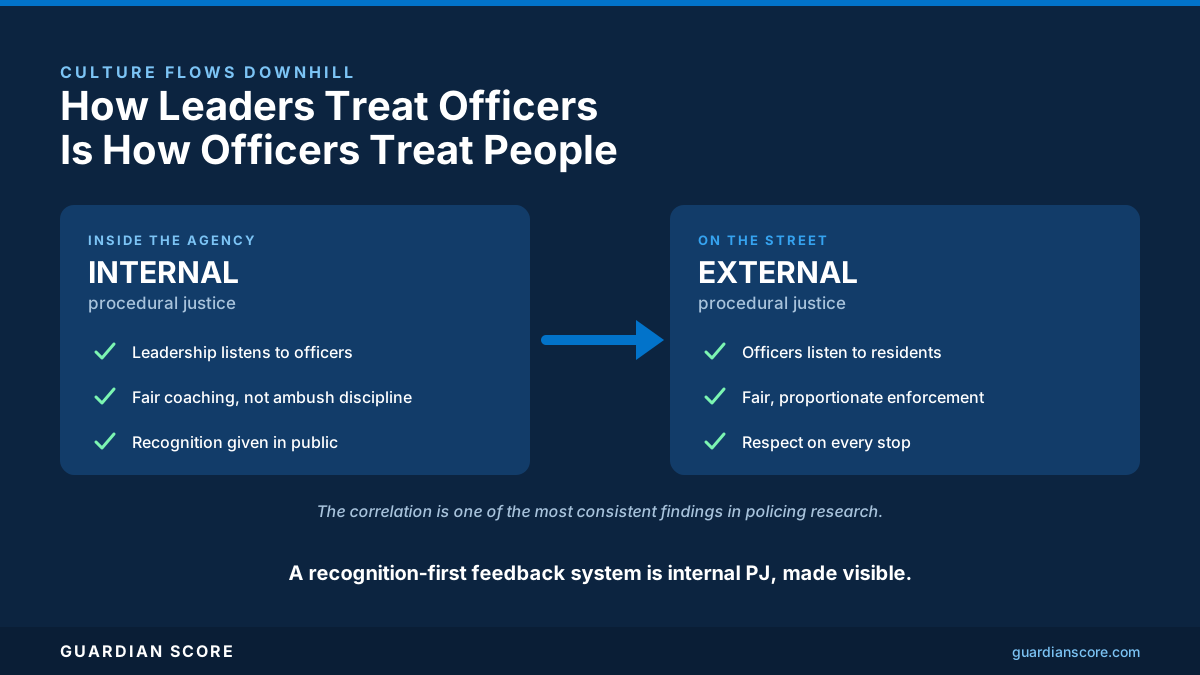
Chiefs who want more procedural justice in the field usually start with training. The research suggests starting closer to home: officers who feel their own agency treats them fairly - with voice, respect, and explained decisions - are markedly more likely to extend that same treatment to residents. Internal procedural justice is not an HR nicety. It is the upstream variable for everything the community experiences.
This infographic lays the two side by side: what fairness looks like inside the building, what it looks like on the street, and the arrow connecting them. It also shows where recognition-first feedback fits - when 97.3% of verified community responses are positive and two-thirds carry written comments, routing that appreciation to officers is internal procedural justice made visible. The department is demonstrating, not just claiming, that good work gets seen. Use this page in a supervisors' meeting to reframe feedback as something done for officers before it is done about them, or in a wellness and retention discussion with city leadership.
For how posture inside the agency shapes posture outside it, see Guardian Mindset vs. Warrior Mindset.