Plenty of chiefs want to measure community trust; fewer have a budget line waiting for it. The frustrating part is that the money often exists - federal community policing programs, state justice-assistance dollars, local foundation grants - but it's scattered across funding streams with different calendars, different applications, and different definitions of "community engagement." The department that never maps them defaults to whatever the general fund allows.
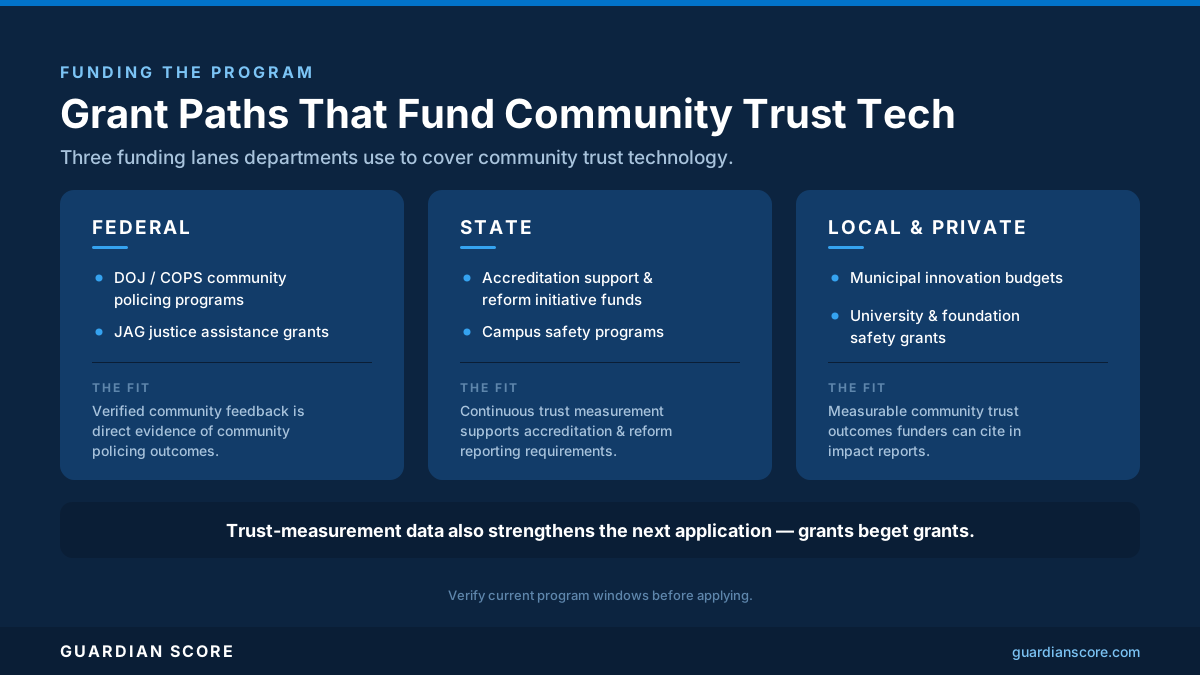
This infographic lays the routes side by side: federal, state, and local paths for community trust technology, what each typically funds, and where a trust-measurement platform fits the eligibility language. It also shows the loop most grant seekers miss - once you're collecting verified community feedback, every subsequent application gets stronger, because you can report measured outcomes instead of promised activities. Grant funders reward departments that can document impact; trust data is exactly that evidence. Hand this to your grants coordinator or city grant writer before the next funding cycle opens, and use it to decide which application deadline you're actually aiming for.
Trust data does double duty in accreditation files, too - see how in CALEA Accreditation and Community Feedback.