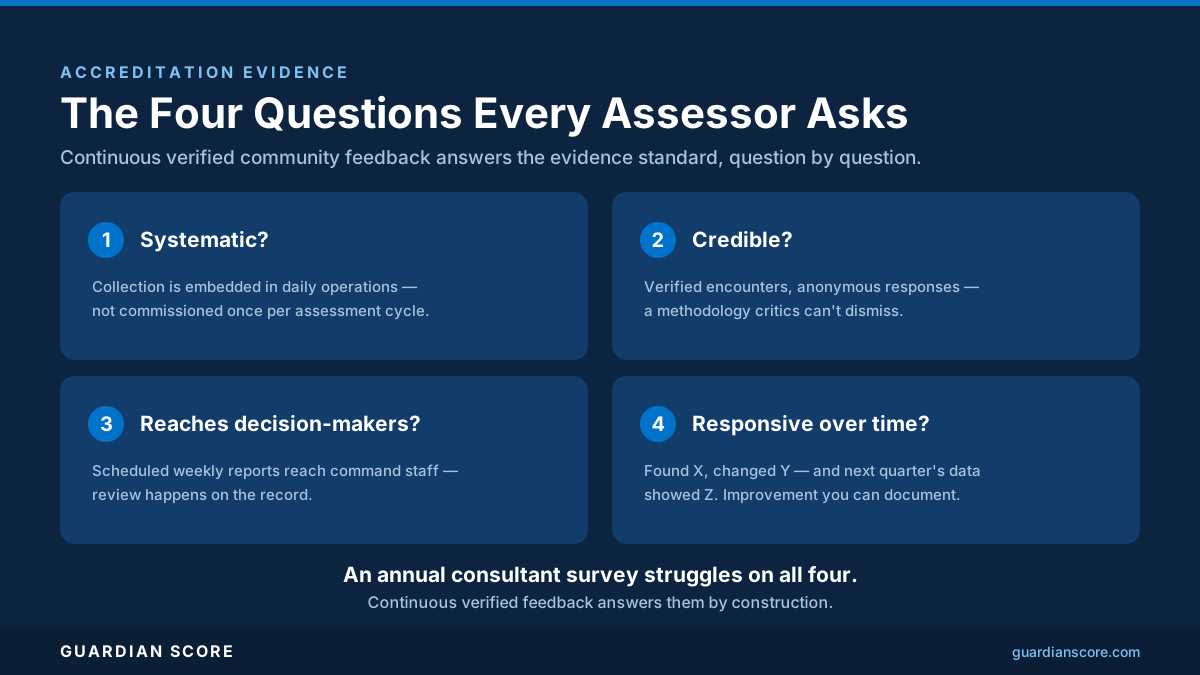
However an assessor phrases it, the interrogation of your community-engagement file comes down to four questions: Is the feedback systematic, or a handful of anecdotes? Is it credible, or self-selected praise? Does it actually reach decision-makers, or die in a shared drive? And is the department responsive over time - can you show the loop closing, month after month? Agencies that answer with town-hall sign-in sheets and an annual survey tend to pass on effort and lose on evidence.
This infographic puts the four questions on one page next to the answer continuous verified feedback provides - by construction, not by preparation. When every police contact can generate a survey invitation, the collection is systematic. When responses are tied to verified interactions and two-thirds of surveys include written comments, the evidence is credible. When supervisors and chiefs see scores in a live dashboard, it reaches decision-makers. And when trends span the full self-assessment cycle, responsiveness is documented by default. Give this page to your accreditation manager before the mock assessment, or use it to pressure-test your current file.
For the full mapping to standards, read CALEA Accreditation and Community Feedback.