Most sergeants already coach - they just do it blind. Without a steady stream of community feedback, the first sign of a developing problem is usually a complaint, and by then the conversation is disciplinary, not developmental. The gap isn't willingness; it's a workflow that surfaces the right officer at the right time.
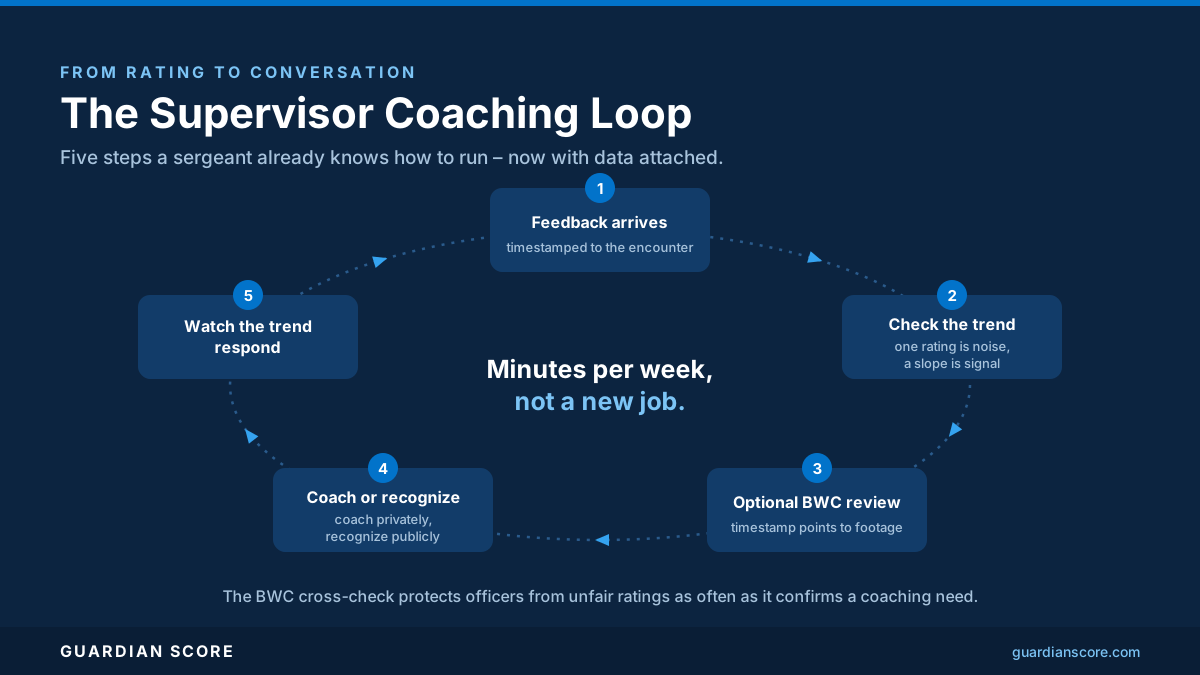
This infographic lays out that workflow as a loop a supervisor can run in minutes per week: a verified rating comes in, the sergeant checks it against the officer's trend, pulls the matching body-worn camera footage when something warrants a closer look, then either coaches or recognizes - and keeps watching the trend to see whether the conversation landed. The BWC cross-check matters in both directions. It protects officers from the outlier rating that doesn't match the video, and it grounds coaching in what actually happened rather than a single data point. Post it in the supervisors' office, walk through it at your next sergeants' meeting, or use it to script what "trend-based supervision" means before a rollout.
For the research behind catching drift before it becomes a complaint, see Police Early Intervention Systems.