Early intervention systems have a reputation problem inside the department: officers experience them as surveillance that only ever notices what went wrong. That is not a training issue - it is an architecture issue. A system that produces only warnings will be resented, gamed, or ignored, and the warnings themselves become slower to act on because nobody trusts the pipeline that carries them.
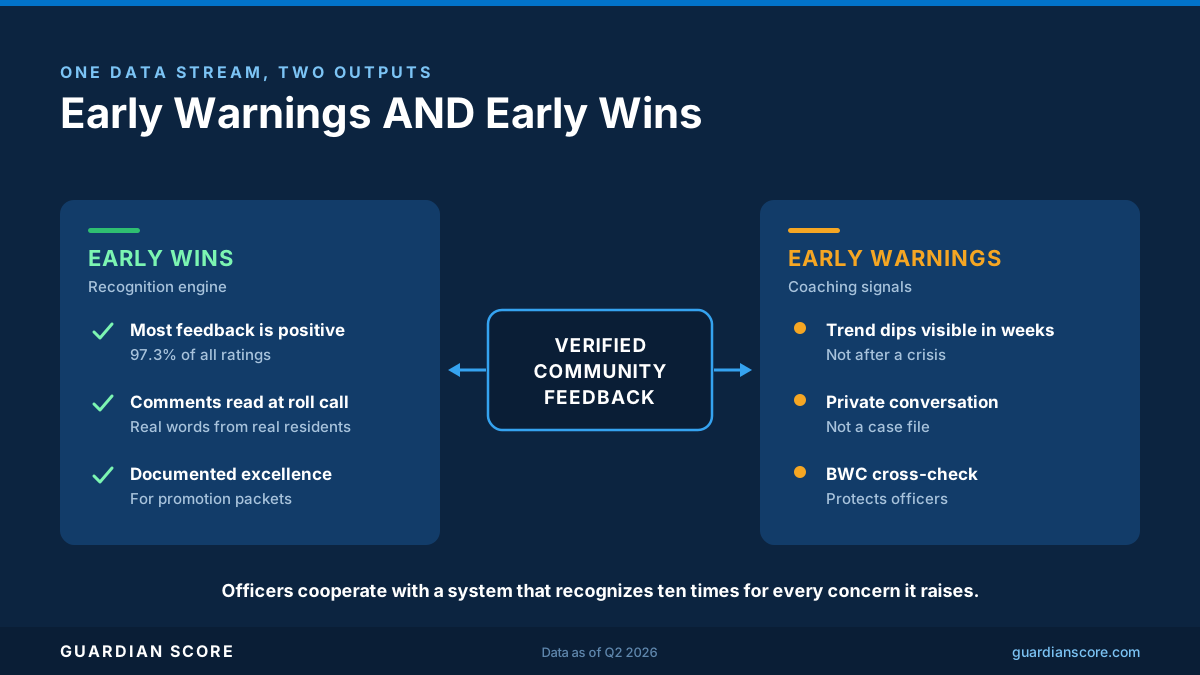
This infographic shows what changes when one verified-feedback stream feeds two outputs instead of one. The same community ratings that surface a downward drift for coaching also surface the opposite: officers earning consistently high marks, week after week, in encounters nobody else witnessed. With 97.3% of ratings positive and two-thirds of surveys including written comments, the recognition side is not a garnish - it is the bulk of the signal. And it is what makes the warning side work: officers engage honestly with a system that mostly catches them doing the job well, and that engagement keeps the data flowing that makes early warnings possible at all.
Use it when pitching continuous feedback to a skeptical patrol division or a wellness committee. For the intervention side, see Police Early Intervention Systems; for the recognition side, Officer Recognition and Retention.